Nutrition for seniors is all about finding delicious and satisfying ways to nourish your body while embracing mindful eating habits. As we age, our nutritional needs change, and tuning in to our hunger cues can help us make better food choices. Let’s explore simple tips and strategies to enjoy meals that support our health and keep us feeling our best!
Benefits of Mindful Eating for Seniors

Mindful eating has a special charm for seniors. It encourages them to enjoy their meals while being fully present in the moment. This practice helps them appreciate the flavors, textures, and aromas of their food. As we see in the image, two seniors share a meal surrounded by nature. This inviting setting enhances their dining experience, making it more enjoyable.
For seniors, being mindful about what they eat can lead to healthier choices. Taking time to savor each bite can help them notice when they’re full, reducing the chances of overeating. It also allows them to connect with their food on a deeper level, fostering a greater appreciation for nutritious ingredients.
Mindful eating can also improve digestion. When seniors eat slowly and chew their food thoroughly, their bodies can process the nutrients better. This practice can lead to increased energy levels and overall well-being. Sharing meals, like in the picture, can further enhance this experience, as it promotes social interaction and joy.
Incorporating seasonal fruits and vegetables into their meals, as depicted in the image, is a great way for seniors to eat mindfully. They can explore different recipes that focus on fresh, healthy ingredients. Simple steps like preparing a colorful salad or a fruit platter can make mealtime exciting and nourishing.
Hydration and Its Importance for Aging Bodies

Staying hydrated is crucial, especially for seniors. As we age, our bodies often become less efficient at recognizing thirst. This can lead to dehydration, which can cause various health issues.
The image shows a senior pouring water into a glass. This simple act highlights the importance of making hydration a regular part of daily life. Water is essential for maintaining energy levels, supporting digestion, and promoting overall well-being.
It’s a good idea to have a glass of water with every meal. Keeping water nearby can also remind seniors to sip throughout the day. Adding slices of fruits like lemon or cucumber can make water more enjoyable and encourage more frequent drinking.
Incorporating hydrating foods, such as fruits and vegetables, is also beneficial. Foods like watermelon, oranges, and cucumbers have high water content. Pairing these with regular water intake can help seniors stay well-hydrated.
Social Aspects of Eating: Sharing Meals with Loved Ones

Sharing meals is more than just feeding our bodies; it’s about nourishing our souls. The image captures a joyful scene where a group of individuals is enjoying a meal together. Their smiles and laughter highlight the importance of connection during mealtime.
For seniors, sharing meals can make eating more enjoyable and fulfilling. It offers a chance to bond with family and friends, creating memories around the table. This social aspect of eating is especially valuable, as it encourages seniors to dine more regularly and can even enhance their appetite.
When preparing meals to share, consider simple recipes that everyone can enjoy. Think about dishes that are not only tasty but also nutritious, like a hearty vegetable soup or a vibrant salad. Ingredients could include fresh greens, colorful veggies, and some protein-rich beans or chicken. Preparing a meal together can also be a fun activity, bringing everyone closer.
The atmosphere is equally important. Setting the table nicely, lighting candles, and playing soft background music can make the dining experience more inviting. These small touches help create a warm environment where conversations can flow freely, enhancing the joy of sharing a meal.
Understanding Nutritional Needs in Later Life

As we age, our nutritional needs change. This image captures a thoughtful moment of a senior person focusing on meal planning. With fresh produce surrounding them, it highlights the importance of mindful eating.
In later life, it’s crucial to balance nutrients. Seniors often require fewer calories but more vitamins and minerals. Foods rich in fiber, like fruits, vegetables, and whole grains, can aid digestion and overall health. The individual in the image seems to be considering these aspects while writing down their meal ideas.
Hydration is also key. Drinking enough water and consuming foods with high water content, like cucumbers and oranges, can help maintain energy levels. The colorful array of fruits and vegetables in the image serves as a reminder to include a variety of nutrients.
Mindful eating is not just about what we eat but also how we eat. Taking time to enjoy meals can improve digestion and satisfaction. This individual appears to be engaged and deliberate, which is a great approach for anyone looking to improve their eating habits.
Creating Balanced Meals with Nutrient-Dense Foods
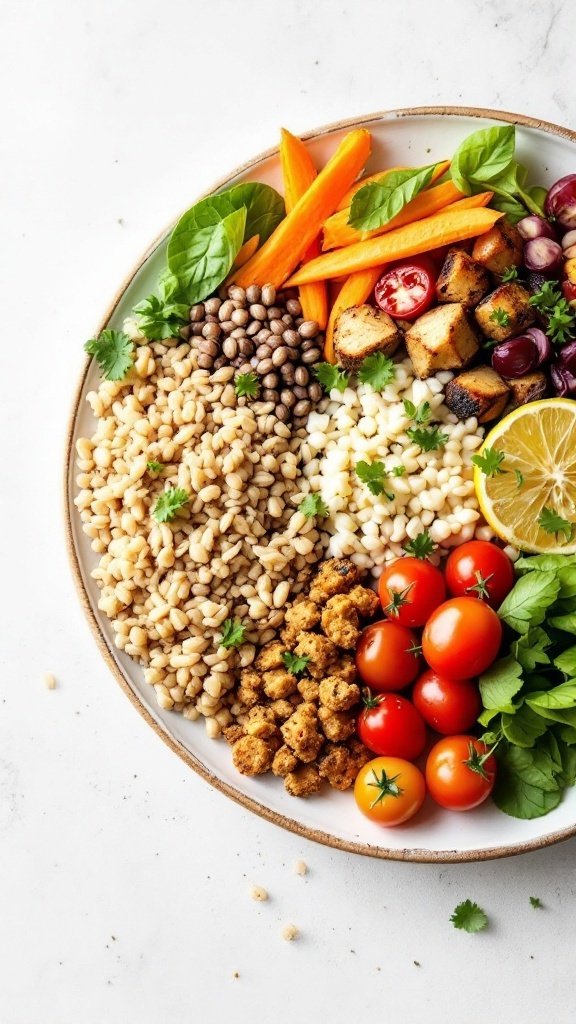
Eating well is key for seniors, and creating balanced meals can be both enjoyable and fulfilling. The image here showcases a colorful plate filled with a variety of nutrient-dense foods. Each component offers its own health benefits, making it a perfect example of a balanced meal.
The plate features whole grains like barley and a mix of legumes, both excellent sources of fiber and protein. Fiber helps with digestion, which is especially important as we age. The vibrant vegetables, including carrots and tomatoes, provide essential vitamins and minerals. Leafy greens, like spinach, add a boost of nutrients that support overall health.
Don’t forget about healthy fats! The inclusion of olive oil or avocado can enhance the flavors while providing heart-healthy benefits. Choosing a mix of colors on your plate not only makes meals visually appealing but also ensures a range of nutrients. Aim for a balance of carbohydrates, proteins, and fats in every meal.
To make a quick and easy meal, you can prepare a simple grain bowl. Start with cooked barley, add your favorite roasted vegetables, toss in some legumes, and top with fresh greens. A squeeze of lemon will add a refreshing twist. Remember, mindful eating is all about enjoying your food, so take your time to savor each bite!
Addressing Dietary Restrictions with Flavorful Options
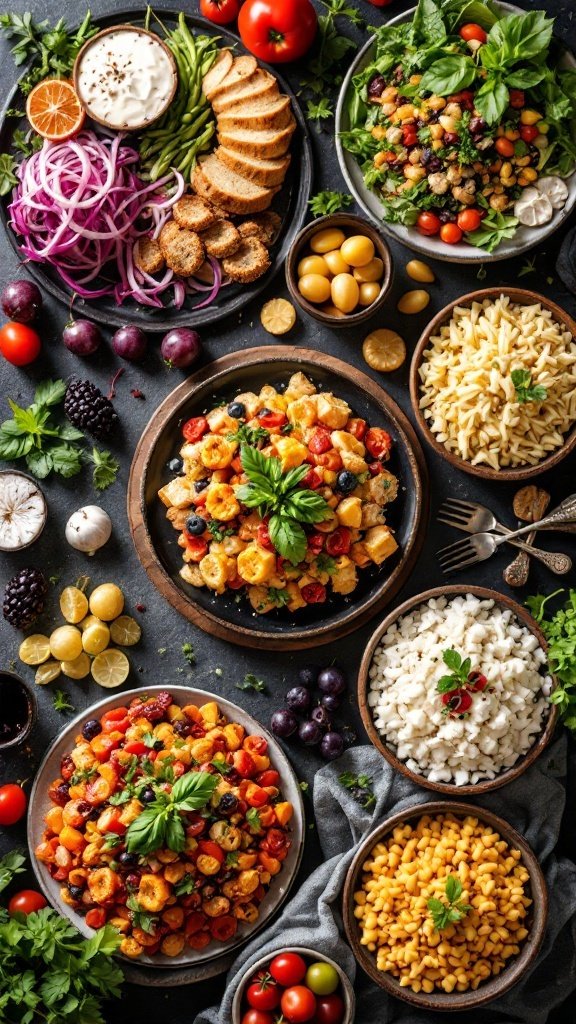
Nutrition for seniors often comes with specific dietary restrictions, but that doesn’t mean meals have to be dull or lacking in flavor. The image above showcases a delightful spread of colorful and appetizing dishes, highlighting how we can create nutritious meals that cater to various needs.
Take a look at the vibrant salads and hearty grain options. These dishes are packed with fresh vegetables, legumes, and healthy grains, making them suitable for many dietary requirements. For instance, the chickpea salad is not only rich in protein but also offers essential nutrients, ensuring seniors get the energy they need without sacrificing taste.
The variety of colors in the image reflects the importance of including a range of ingredients. This not only makes meals visually appealing but also ensures a broad spectrum of vitamins and minerals. Incorporating foods like tomatoes, olives, and fresh herbs like basil adds flavor while keeping meals healthy.
For those who might need to watch their sodium intake, using herbs and citrus zest can enhance flavors significantly. Instead of relying on salt, think about squeezing some fresh lemon juice or adding a sprinkle of garlic powder. These little changes can make a big difference in taste without compromising health.
Don’t forget about textures! The crunchy elements, like the toasted bread and fresh vegetables, provide a satisfying bite. Pairing soft pasta with crispy greens can create a well-rounded meal that feels indulgent yet remains mindful of dietary needs.
In summary, addressing dietary restrictions doesn’t mean settling for bland food. With a focus on vibrant, fresh ingredients and creative preparation, meals can be both nutritious and enjoyable for seniors.
The Role of Supplements in Senior Nutrition

When it comes to senior nutrition, supplements play an important part. Many seniors may find it challenging to get all the nutrients they need from food alone. This image beautifully illustrates the balance between fresh produce and dietary supplements. You can see vibrant vegetables and fruits surrounding a bowl of salad, which serves as a reminder of how essential whole foods are in our diet. At the same time, the presence of various supplements shows their role in filling in the gaps.
For seniors, certain nutrients become more critical. For instance, calcium and vitamin D are vital for bone health. Omega-3 fatty acids can support heart health, while B vitamins are key for energy levels. The colorful array of supplements in the image highlights these nutrients, making it clear that they are beneficial for overall well-being.
However, it’s advisable to consult a healthcare provider before adding any supplements. Not all seniors need the same nutrients, and it’s essential to choose what works best for individual health needs. Pairing supplements with a balanced diet ensures that seniors receive a comprehensive nutrition plan.
Mindful eating is another key aspect to consider. Taking time to enjoy meals can enhance digestion and help seniors make better food choices. This image invites us to think about how we combine fresh ingredients with smart supplementation for better health outcomes.
Mindful Eating Practices: Techniques and Tips
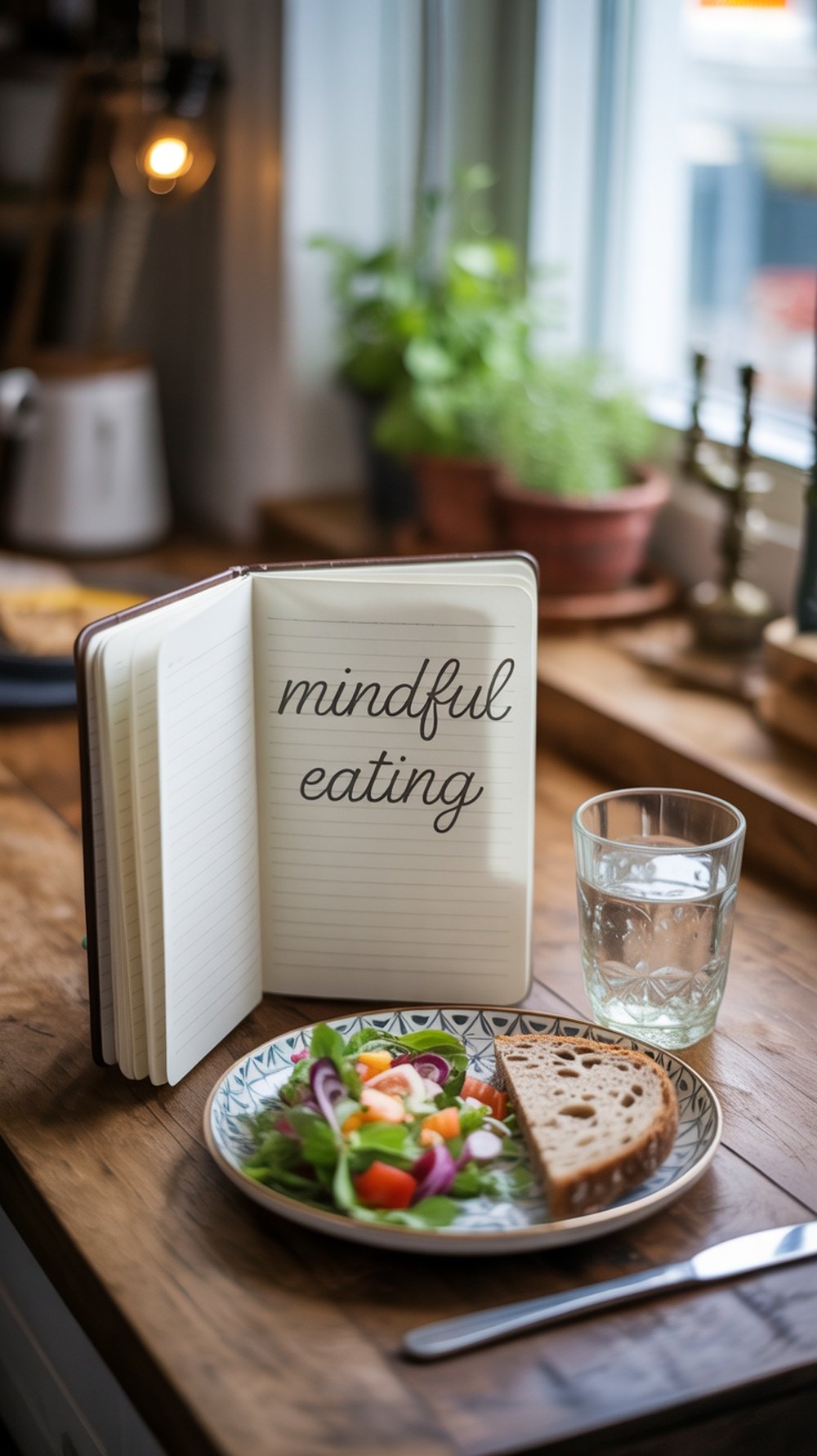
Mindful eating is all about being present while you eat. It encourages you to savor every bite and enjoy your meal without distractions. In the image, we see a beautiful setup that embodies this practice. A notebook with the words ‘mindful eating tips’ reminds us to jot down thoughts or ideas that help focus on our eating habits.
Surrounding the notebook are fresh and colorful ingredients like a halved lemon and a vibrant salad. These elements not only look appealing but also suggest that healthy choices can be visually stimulating. Eating a rainbow of colors means getting a variety of nutrients, which is especially important for seniors.
To practice mindful eating, start by slowing down. Take a moment to appreciate the colors, textures, and smells of your food before you take a bite. Chew slowly and taste each flavor. This practice can help you enjoy your meals more and possibly eat less, as you become more aware of your hunger and fullness cues.
Another tip is to minimize distractions. Try to eat at a table rather than in front of the TV or computer. This simple change can help you focus on your meal and make it a more enjoyable experience. Remember, mealtime is also a time for connection, whether it’s with family or simply enjoying your own company.
Lastly, consider keeping a food journal. Writing down what you eat and how you feel can provide insights into your eating habits. This can be a valuable tool for making healthier choices as you age. Mindful eating is not just about food; it’s about nourishing your body and soul.
Cooking for Wellness: Easy Recipes for Seniors

In the kitchen, a senior is shown preparing fresh ingredients with focus and care. This scene highlights how cooking can be a joyful and mindful experience, especially for those looking to maintain their health through nutrition.
Cooking at home allows seniors to choose fresh, wholesome ingredients that can nourish their bodies. Simple recipes can make this process enjoyable and not overwhelming. For instance, a colorful salad or a hearty vegetable soup can be nutritious and easy to prepare.
Here’s a simple recipe for a refreshing garden salad that seniors can enjoy making:
Ingredients:1 cup of mixed greens, 1/2 cucumber (sliced), 1 tomato (chopped), 1/4 cup of shredded carrots, and a handful of cherry tomatoes. For the dressing, mix 2 tablespoons of olive oil, 1 tablespoon of vinegar, salt, and pepper to taste.
Steps:1. Start by washing all the vegetables. 2. In a large bowl, combine the mixed greens, cucumber, tomato, carrots, and cherry tomatoes. 3. In a small bowl, whisk together the olive oil, vinegar, salt, and pepper. 4. Drizzle the dressing over the salad and toss gently.
This salad is not only simple but also packed with vitamins. It encourages mindful eating, allowing seniors to appreciate the flavors and textures of each ingredient.
Grocery Shopping Tips for Healthy Choices

Grocery shopping can be a fun experience, especially when you’re focused on making healthy choices. In the image, we see a senior man thoughtfully examining fresh produce in a vibrant grocery store. His attention to detail shows the importance of being mindful while shopping.
When shopping, start by making a list. This helps you stick to necessary items and avoid impulse buys. Include a variety of colorful fruits and vegetables. They are packed with nutrients and can help maintain overall health.
Always check labels on packaged foods. Look for items with less sugar and sodium. It’s a simple way to make healthier choices without sacrificing taste. Don’t forget to explore the bulk section for whole grains and legumes; they can be great additions to your meals.
Don’t rush your shopping trip. Take your time to browse different aisles and discover new ingredients. Trying out new recipes can be a fun way to keep your diet interesting.
Lastly, consider shopping at local farmers’ markets. They often have fresh, seasonal produce. Plus, supporting local farmers is a wonderful way to contribute to your community.
This post may contain affiliate links which means I may receive a commission for purchases made through links. I will only recommend products that I have personally used! Learn more on my Private Policy page.
