
Have you ever started a new weight loss plan on Monday convinced that this time you were going to do everything right?
You were going to eat better, exercise every day, drink more water, stop snacking, and finally see the number on the scale move.
Then real life happened.
You got busy.
Dinner didn’t go as planned.
You skipped a workout.
And suddenly one imperfect day started feeling like another failed attempt.
If that sounds familiar, the problem may not be that you need more motivation.
You may simply be trying to change too much at once.
Short-term weight loss goals can give you something smaller and more realistic to work toward.
Instead of thinking only about how many pounds you want to lose, you can focus on the everyday habits that help move you in that direction.
Here are nine realistic weight loss goals you can start with.
Why Short-Term Weight Loss Goals Can Make Progress Feel Easier
There’s nothing wrong with having a bigger goal.
Maybe you’d like to lose 20 pounds.
Maybe you want your clothes to fit more comfortably.
Maybe you’re trying to improve your health, feel stronger, or have more energy.
The problem comes when the final result is the only thing you’re measuring.
Your body weight can change for many reasons, and you can’t completely control what the scale says on a particular morning.
You can control many of the actions that support your goal.
That’s the difference between an outcome goal and a process goal.
An outcome goal might be:
I want to lose 20 pounds.
A process goal might be:
I will walk for 15 minutes after dinner three times this week.
The first tells you where you want to go.
The second tells you what to do today.

And when you’re trying to build healthier habits, that second part matters.
1. Choose Just Two or Three Goals at a Time
It’s tempting to overhaul everything when you’re ready to lose weight.
Don’t.
Pick two or three changes that feel manageable in your current life.
For example:
- Walk three evenings this week.
- Plan dinner before the workday gets hectic.
- Drink water instead of your usual sugary afternoon drink.
That’s enough to start.
You can always add another habit once those changes begin to feel more natural.
Try this: Write down two things you realistically believe you can repeat for the next seven days.

2. Plan a Few Meals Before You’re Hungry
Healthy eating gets much harder when you’re tired, hungry, and trying to decide what to eat at the last minute.
You don’t need an elaborate meal-prep system.
Start smaller.
Choose three dinners for the coming week.
Make a grocery list.
Keep a few simple foods available for busy days.
Planning ahead removes one decision from the moment when your hunger is doing most of the talking.
Try this: Before your next grocery trip, decide what you’ll eat for three dinners and one easy backup meal.

3. Add More Filling Foods to Your Meals
Weight loss doesn’t have to mean building meals around everything you aren’t allowed to eat.
Think about what you can add.
Vegetables, fruits, whole grains, beans, eggs, seafood, lean meats, nuts, seeds, and other nutrient-dense foods can all fit into a balanced eating pattern.
Including foods that provide protein, fiber, or both can also help make meals more satisfying.
That can make healthy eating feel less like deprivation and more like something you can actually continue.
Try this: Choose one meal you eat regularly and add a fruit, vegetable, or satisfying protein source to it.

4. Replace One Sugary Drink a Day
You don’t need to swear off every favorite drink overnight.
Start with one.
If soda, sweet tea, specialty coffee drinks, or other sugary beverages are a regular part of your day, choose one occasion when water or another unsweetened drink would be an easy substitute.
A small change you repeat consistently is more useful than an extreme rule you abandon after three days.
Try this: Pick one drink you’ll replace each day this week.
5. Take a Short Walk You Can Actually Repeat
You don’t have to begin with an exhausting workout program.
Walking counts.
If 30 or 60 minutes feels unrealistic right now, start with 10 or 15.
Walk after dinner.
Walk during lunch.
Walk while talking to a friend on the phone.
The goal isn’t to prove how hard you can exercise.
It’s to find movement that fits into your life well enough that you’ll do it again.
As your fitness improves, you can gradually build from there.
Try this: Schedule three 15-minute walks this week.

6. Learn What a Comfortable Portion Feels Like
Portion awareness doesn’t have to mean weighing every bite of food.
Start by paying attention.
How hungry are you before the meal?
Are you eating quickly because you’re distracted?
Are you automatically going back for seconds?
Do you still feel hungry, or are you simply used to eating a certain amount?
Slowing down enough to notice those signals can help you understand your eating habits without turning every meal into a math problem.
Try this: For one meal each day, put away distractions and check in with your hunger before getting another serving.
7. Track One Habit Instead of Tracking Everything
Tracking can be useful, but it can also become another thing you feel like you’re failing at.
You don’t need to record every possible number.
Choose the information that actually helps you.
You might track:
- Daily walks
- Water
- Planned meals
- Vegetables
- Sleep
- Home-cooked dinners
- How often you followed through on your weekly goal
A notebook works just as well as an app if that’s easier for you.
The point isn’t to create a perfect record.
It’s to notice patterns.
Try this: Pick one habit and put a checkmark on the calendar every day you complete it.

8. Create a Plan for Your Most Difficult Time of Day
Most of us have a time when healthy intentions become harder to follow.
Maybe it’s 3 p.m. at work.
Maybe it’s while making dinner.
Maybe it’s late at night when you’re finally sitting on the couch.
Instead of relying on willpower, plan for that moment.
If you’re usually starving after work, have a satisfying snack available.
If you tend to snack while watching television, decide ahead of time what you’ll have if you’re genuinely hungry.
If stress sends you looking for food, experiment with another short transition ritual first—a walk, shower, cup of tea, music, journaling, or simply ten quiet minutes.
You’re not trying to become perfect.
You’re trying to make the difficult moment a little easier to handle.
Try this: Identify your hardest eating time and make one simple plan for it before it happens.
9. Make “Getting Back on Track” One of Your Goals
This might be the most important goal on the list.
You will have days that don’t go according to plan.
Everyone does.
A restaurant meal, vacation, stressful week, missed walk, or evening of overeating doesn’t erase everything you’ve been doing.
Instead of asking:
“Did I mess up?”
try asking:
“What’s the next helpful choice I can make?”
Maybe that’s drinking some water.
Maybe it’s eating your normal breakfast instead of skipping it.
Maybe it’s taking your planned walk.
Maybe it’s simply starting again at the next meal instead of waiting for another Monday.
Being able to return to your habits after an imperfect day is part of making those habits sustainable.
Try this: Write down one sentence you’ll use after an off-plan day: My next choice still counts.

What About a Goal on the Scale?
You can still have one.
For people who are trying to lose weight, gradual progress is generally easier to maintain than rapid weight loss.
But your personal rate of weight loss can vary.
Age, medications, medical conditions, hormones, sleep, stress, genetics, activity, and other factors can all affect weight management.
That’s why your weekly habits deserve attention even when the scale doesn’t move exactly when you hoped it would.
Instead of making your entire definition of success:
“Did I lose weight this week?”
also ask:
Did I follow through on more of my planned habits?
Did I walk more often?
Did I plan more meals?
Did I recover faster after an off-plan day?
Am I building something I could realistically keep doing?
Those changes matter too.
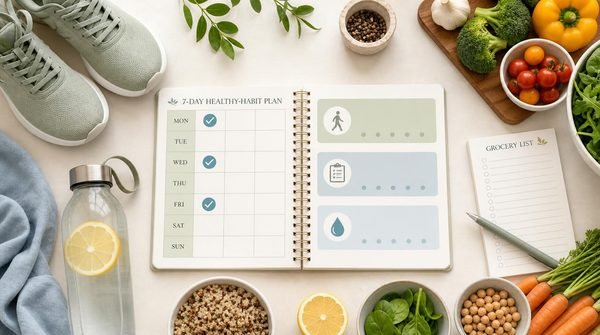
A Simple 7-Day Weight Loss Goal Plan
If you’re not sure where to begin, don’t start with all nine goals.
Choose three.
Your first week could look like this:
Goal 1: Walk for 15 minutes on Monday, Wednesday, and Friday.
Goal 2: Plan three dinners before grocery shopping.
Goal 3: Replace your afternoon sugary drink with water.
That’s it.
At the end of seven days, review what happened.
What felt easy?
What kept getting in the way?
What would you change?
If a goal worked, repeat it.
If it became easy, build on it.
If it didn’t fit your life, adjust it rather than deciding you’ve failed.
Think Beyond the Scale
Weight loss may be one reason you’re making these changes, but it doesn’t have to be your only measure of progress.
Pay attention to other victories too.
Maybe walking up the stairs feels easier.
Maybe you’re cooking at home more often.
Maybe you’ve gone two weeks without abandoning your plan after one difficult day.
Maybe your afternoon energy feels better.
Maybe your healthy choices are starting to require less thought.
Those small signs can tell you something important:
You’re becoming more consistent.
And consistency is something you can keep building on.

Small Goals Can Lead to Bigger Changes
You don’t need a perfect month.
You don’t need a flawless diet.
And you don’t need to change your entire life by next Monday.
Choose one or two habits that make sense for where you are right now.
Practice them.
Learn what works.
Adjust what doesn’t.
Then take the next step.
Start with one goal you can repeat this week.
If staying consistent is usually the hardest part, the Weight Loss Strategies guide goes deeper into practical eating, movement, mindset, and everyday habits that can help you build a weight loss approach that fits real life.
Your bigger goal can stay in the distance.
For today, just focus on your next small step.
Frequently Asked Questions
What is a realistic short-term weight loss goal?
A useful short-term goal focuses on an action you can realistically repeat, such as walking for 15 minutes three days this week, planning several dinners, or replacing one sugary drink each day.
You can still have a goal for weight loss, but pairing it with specific behavior goals gives you something you can act on immediately.
How much weight should I try to lose each week?
For people who are advised to lose weight, gradual weight loss of around 1 to 2 pounds per week is commonly recommended and is more likely to be maintained than faster weight loss.
Individual needs vary, so talk with a healthcare professional if you’re unsure what is appropriate for you.
How many weight loss goals should I work on at once?
Start small.
Two or three specific goals are often enough.
Once a habit becomes easier to maintain, you can build on it or add another goal.
What if I don’t meet my weekly goal?
Use it as information rather than proof that you failed.
Ask what got in the way and make the goal easier or more practical for the following week.
A missed goal doesn’t require starting over.
Should all of my goals be based on the scale?
No.
You can also track behaviors and other signs of progress, including walking, meal planning, cooking at home, improved consistency, fitness, or how quickly you return to your routine after a difficult day.
Is losing 20 pounds in a few weeks a realistic short-term goal?
For most people, rapid weight-loss targets aren’t a good starting point.
Gradual weight loss is generally recommended because it is more likely to be maintained.
Instead of setting an aggressive deadline, consider discussing an appropriate weight goal with your healthcare provider and focus on habits you can sustain along the way.
If you have a medical condition, take medications that affect weight, are pregnant, have a history of disordered eating, or have questions about what weight-loss approach is appropriate for you, talk with a qualified healthcare professional before making major changes to your diet or activity.
This post may contain affiliate links which means I may receive a commission for purchases made through links. I will only recommend products that I have personally used! Learn more on my Private Policy page.


