Eating healthy doesn’t always lead to losing fat, which can be frustrating. If you’ve been focusing on nutritious meals yet aren’t seeing the results you want, there may be a few sneaky habits holding you back. Let’s break down six surprising reasons that might explain why your efforts aren’t matching your results.
Lack of Consistent Exercise

Many people think they can eat healthy and skip exercise, but that’s not how it works. The image shows someone sitting on a couch, ready to work out but seemingly hesitant. This captures the struggle many face when trying to stay active.
Eating nutritious foods is a great start, but without regular exercise, those efforts can stall. Exercise helps burn calories and builds muscle, which boosts metabolism. Just eating right isn’t enough if you’re not moving your body.
It’s easy to get caught up in a busy schedule and forget to prioritize workouts. However, finding even small pockets of time for physical activity can make a difference. Whether it’s a quick home workout or a walk around the block, consistency is key.
Remember, it’s not about perfection. It’s about making movement a regular part of your life. So, if you’re struggling to lose fat, take a look at your exercise routine. Are you making it a habit? If not, it might be time to lace up those sneakers and get moving!
Inadequate Protein Consumption

When you’re trying to lose fat, protein plays a key role. The image shows a delicious plate featuring grilled chicken, quinoa, and black beans. This meal is packed with protein, which is essential for muscle repair and growth.
Many people focus on cutting calories, but they forget to prioritize protein. If you’re not getting enough, your body may not function optimally. Protein helps keep you full, so you’re less likely to snack on unhealthy foods.
Incorporating more protein into your meals can be simple. Think about adding chicken, fish, beans, or even plant-based options like lentils and tofu. These foods not only help with satiety but also support muscle maintenance while you lose fat.
So, if you’re eating healthy but not seeing results, check your protein intake. It might be the missing piece in your fat-loss puzzle.
Stress and Hormonal Imbalance

Stress can really mess with your body, and it often goes unnoticed. The image shows someone overwhelmed, surrounded by fast food. This visual captures how stress can lead to unhealthy eating habits, even when you think you’re trying to eat healthy.
When you’re stressed, your body releases cortisol, a hormone that can increase appetite and cravings for high-calorie foods. This is why you might find yourself reaching for that burger or fries, even if you had plans for a healthy meal.
Hormonal imbalances can also play a role. If your hormones are out of whack, it can affect your metabolism and how your body stores fat. This means that even if you’re eating healthy, you might not see the results you want.
Managing stress through activities like exercise, meditation, or simply taking time for yourself can help. Finding balance is key. Remember, it’s not just about what you eat, but how you feel while eating it.
Neglecting Portion Sizes

When we think about eating healthy, we often focus on the types of foods we choose. The image above shows two plates: one with a burger and fries, and the other with grilled chicken, rice, and veggies. At first glance, the second plate looks healthier. However, portion sizes play a huge role in our weight loss journey.
Many people assume that eating healthy foods means they can eat as much as they want. This is a common misconception. Even healthy foods can contribute to weight gain if consumed in large amounts. The grilled chicken and veggies might seem like a guilt-free option, but if the portions are too big, they can still lead to excess calorie intake.
On the flip side, the burger and fries might be seen as a treat. Yet, if you’re mindful of portion sizes, you can enjoy them without derailing your goals. It’s all about balance. Understanding how much you’re eating is key to managing your weight effectively.
So, next time you sit down for a meal, take a moment to think about your portion sizes. It’s not just what you eat, but how much you eat that matters. Keeping an eye on portions can help you stay on track while still enjoying a variety of foods.
Underestimating Caloric Intake

Many people think they’re eating healthy, but they often overlook one key factor: caloric intake. The image shows a person weighing food on a scale, surrounded by a variety of fruits, vegetables, and snacks. This scene highlights the importance of being mindful about portion sizes.
When you focus on healthy foods, it’s easy to underestimate how many calories you’re actually consuming. For example, nuts and dried fruits are nutritious, but they can be calorie-dense. A small handful can pack a significant caloric punch.
Using a food scale, like the one in the image, can help you get a better grasp on your portions. It’s a simple way to track what you eat and ensure you’re not overdoing it, even with healthy options. Remember, even healthy foods can lead to weight gain if consumed in large amounts.
So, take a moment to weigh your portions. You might be surprised at how quickly those healthy snacks add up. Being aware of your caloric intake is a game changer when it comes to achieving your fat loss goals.
Hidden Sugars in Healthy Foods
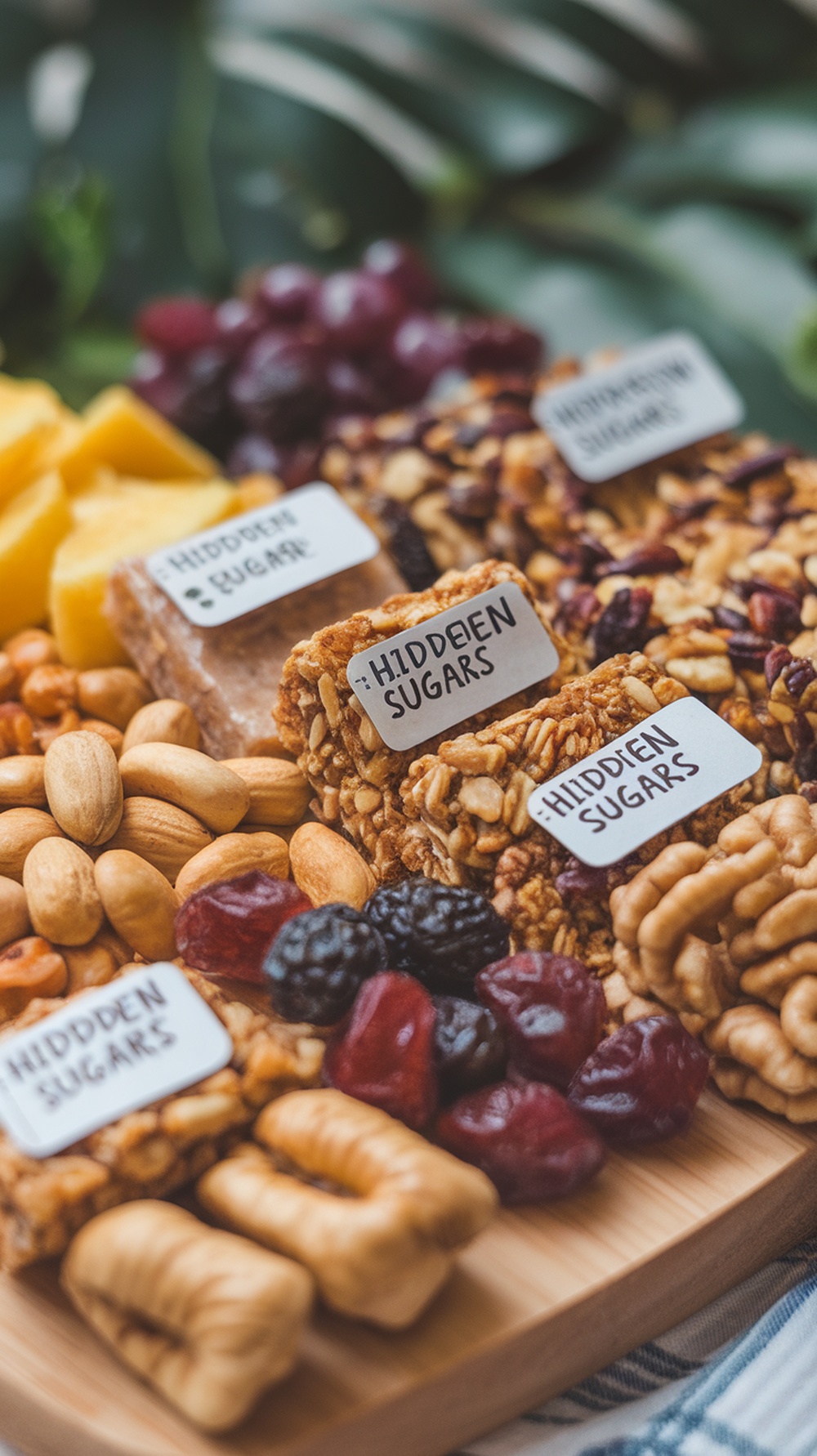
When you think of healthy snacks, granola bars and dried fruits often come to mind. They seem like great options, right? But take a closer look, and you might find a surprise. Many of these foods are packed with hidden sugars.
The image shows a variety of snacks, each labeled with ‘Hidden Sugars.’ These labels remind us that even foods marketed as healthy can contain more sugar than we realize. For instance, granola bars can have added sweeteners that boost their sugar content significantly.
Fruits, while natural, can also contribute to your sugar intake, especially when dried. They lose water content, concentrating their sugars. So, while munching on that trail mix, you might be consuming more sugar than you bargained for.
It’s important to read labels carefully. Look for added sugars in the ingredient list. Even ‘natural’ sweeteners can add up. By being aware of these hidden sugars, you can make better choices and stay on track with your fat loss goals.
This post may contain affiliate links which means I may receive a commission for purchases made through links. I will only recommend products that I have personally used! Learn more on my Private Policy page.
