Nutrition plays a vital role in the health and well-being of seniors, but it can be tricky to navigate with all the options out there. This guide offers 30 straightforward nutrition tips designed specifically for older adults, helping to make healthy eating simple and enjoyable. Let’s dive in and explore how good food can contribute to a happier, healthier life!
Role of Antioxidants in Aging
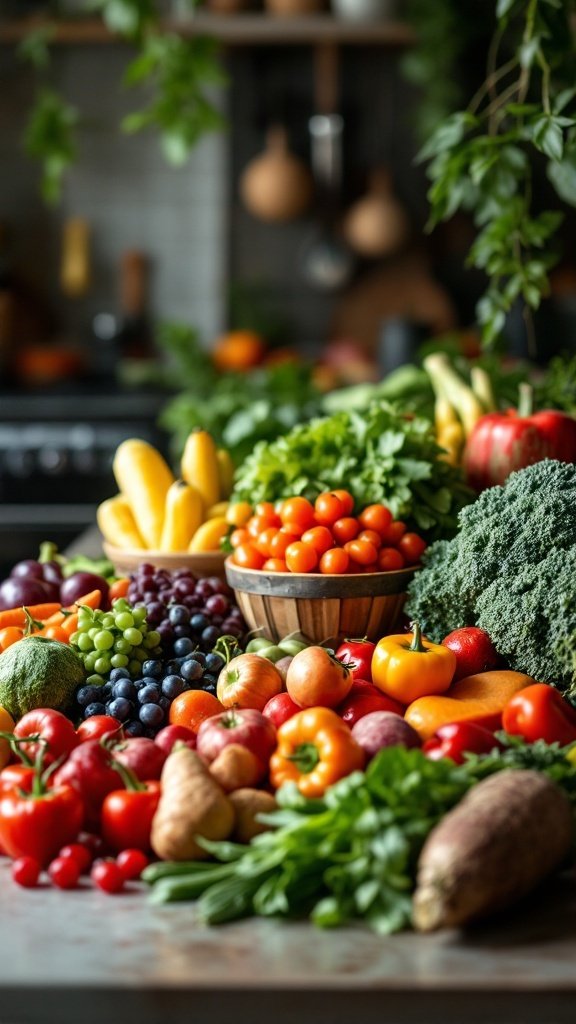
In the journey of aging, incorporating antioxidants into our diet can be a helpful strategy. The image shows a colorful array of fruits and vegetables, which are rich sources of these beneficial compounds. Eating a variety of these foods can play a key role in supporting overall health.
Antioxidants help combat oxidative stress caused by free radicals in the body. As we age, our cells are more prone to this damage, leading to various health issues. By consuming foods full of antioxidants, such as berries, leafy greens, and vibrant vegetables, seniors can support their immune system and reduce inflammation.
Adding antioxidants to meals is simple. You can create a hearty salad using kale, tomatoes, and bell peppers or blend a smoothie with fruits like blueberries and grapes. These small dietary changes can have a positive impact on health and well-being.
Incorporating these colorful foods into daily meals not only provides essential nutrients but also adds flavor and variety. Remember, eating the rainbow is not just a fun saying; it’s a way to ensure you’re getting a range of antioxidants that can support healthy aging.
Benefits of Calcium and Vitamin D
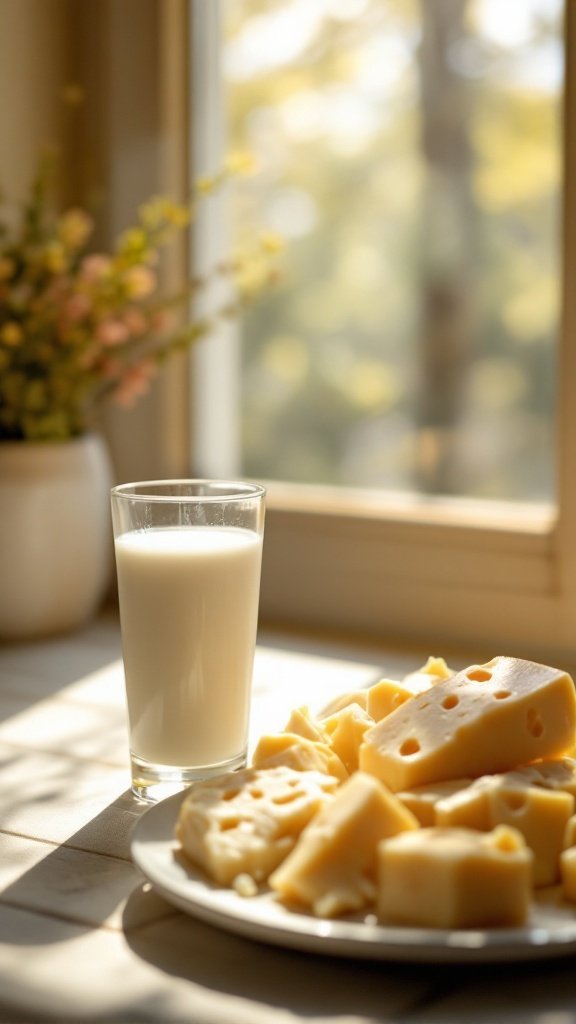
In the image, we see a refreshing glass of milk alongside a plate of assorted cheese. This simple yet nutritious arrangement highlights two crucial nutrients: calcium and vitamin D.
Calcium plays a vital role in maintaining bone health, especially for seniors. As we age, bones naturally become weaker. Consuming plenty of calcium helps in keeping bones strong and reduces the risk of fractures.
Vitamin D is just as important. It aids in calcium absorption, ensuring your body can effectively use this essential mineral. Spending time in sunlight helps your body produce vitamin D, but it can also be found in food sources like fatty fish and fortified products.
Combining calcium-rich foods like milk and cheese with sufficient vitamin D can improve overall bone density. This is especially beneficial for seniors, promoting mobility and independence.
Adding milk and cheese to your daily meals can be an easy way to boost your intake of these nutrients. A slice of cheese here and a glass of milk there can make a big difference in your health over time.
Nutrients Essential for Healthy Aging
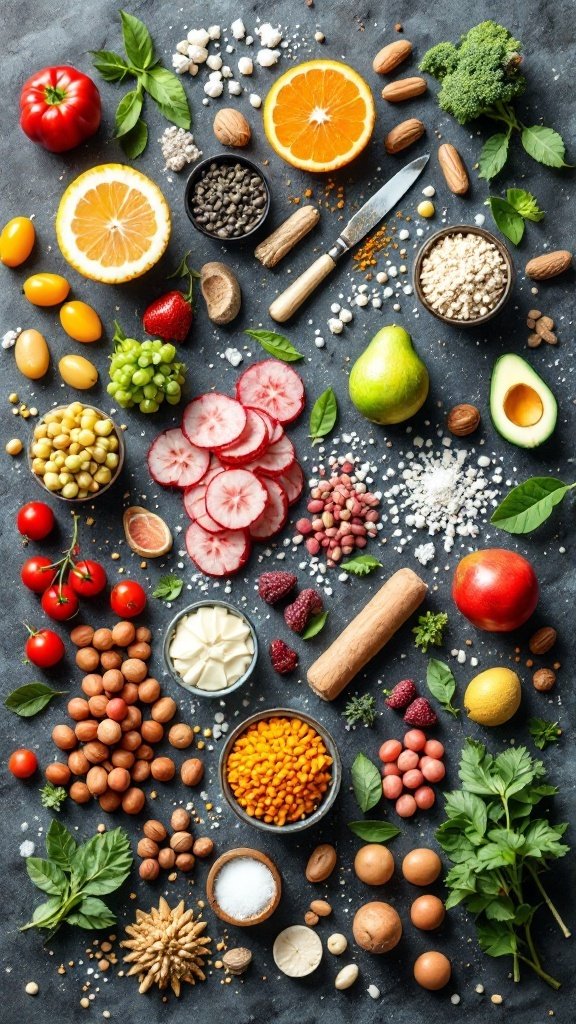
In the journey of aging, nutrition plays a vital role in maintaining health and vitality. The image above showcases a vibrant array of foods that are packed with essential nutrients. Each item on the table contributes uniquely to a balanced diet that supports seniors as they age.
Fruits and vegetables stand out as key players. For instance, oranges and strawberries are not only delicious but also rich in vitamin C, which helps boost the immune system. Leafy greens, like broccoli and parsley, provide important vitamins and minerals that support bone health.
Whole grains, such as oats and quinoa, are represented too. They are excellent sources of fiber, which aids digestion and can help manage cholesterol levels. Nuts and seeds, including almonds and flaxseeds, offer healthy fats that are beneficial for heart health.
Don’t forget about proteins! Beans and legumes, along with eggs, help maintain muscle mass, which is crucial as we age. Including a variety of these foods in daily meals can help seniors stay energetic and strong.
Incorporating these nutrient-rich foods into meals doesn’t have to be complicated. Simple recipes, like a mixed salad with fresh greens, nuts, and a squeeze of lemon, can be both tasty and nourishing. The key is to mix and match ingredients to keep meals interesting and full of health benefits.
Fiber-Rich Foods for Digestive Health
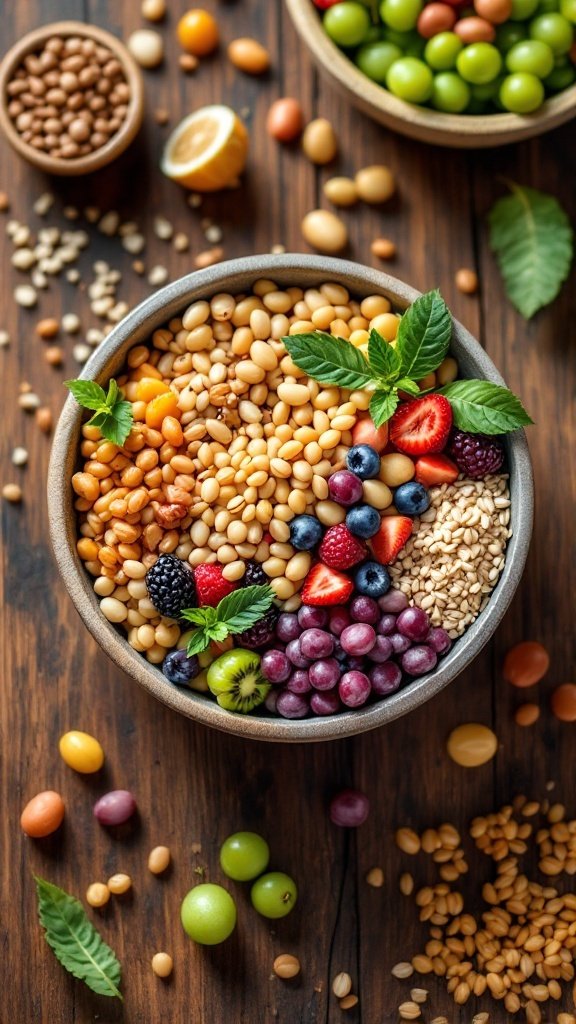
Fiber plays an essential role in digestive health, especially for seniors. Incorporating fiber-rich foods can help keep digestion smooth and regular.
The image showcases a colorful array of fiber sources. You can see a mix of beans, berries, and grains beautifully arranged. Each of these foods brings unique benefits. Beans are not only high in fiber but also packed with protein, making them a great staple in any diet.
The vibrant berries, including strawberries and blueberries, add antioxidants while providing soluble fiber that helps with cholesterol levels. Don’t overlook the grains; oats and other whole grains can be a fantastic addition to breakfast or snacks.
Incorporating these foods into meals can be simple. Consider adding beans to soups or salads, enjoying berries as a snack, or opting for whole-grain bread. It’s an easy way to boost fiber intake and support digestive health.
Protein Needs for Seniors
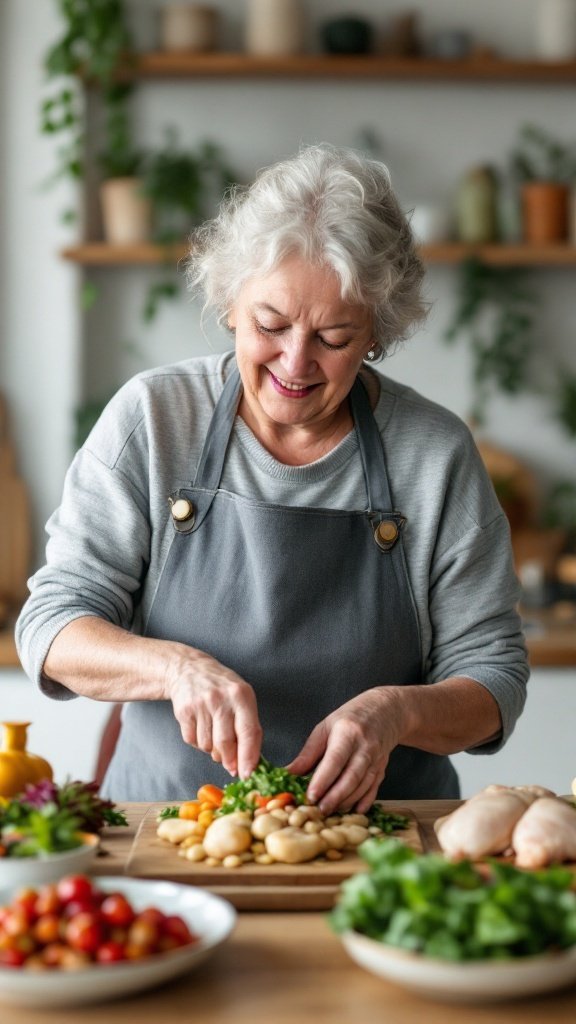
As we age, our bodies require specific nutrients to stay healthy and active. One of the most important nutrients for seniors is protein. Protein helps repair tissues, build muscles, and keep our immune system strong. It’s especially crucial for seniors who may experience muscle loss as they age.
In the image, we see a senior woman happily preparing a meal, surrounded by fresh vegetables and lean proteins. This scene perfectly illustrates how cooking with whole foods can support nutritional needs. Using fresh ingredients not only enhances the taste but also maximizes the nutritional value of each meal.
So, how much protein do seniors need? Generally, it’s recommended that seniors consume about 1 to 1.2 grams of protein per kilogram of body weight each day. This can vary based on individual health conditions and lifestyle, so it’s a good idea to consult with a healthcare professional for personalized advice.
Incorporating a variety of protein sources is key. Lean meats, poultry, fish, eggs, beans, and legumes are all excellent options. For plant-based diets, consider nuts, seeds, and whole grains. These foods not only provide protein but also offer other essential nutrients.
As you cook, think about how your meals can be balanced. Combining proteins with healthy fats and carbohydrates can create a well-rounded dish. Enjoying meals like a colorful stir-fry or a hearty salad with grains can be both satisfying and beneficial.
Hydration Tips for Older Adults

Staying hydrated is super important, especially for older adults. In the image, we see a senior man enjoying a glass of water, which serves as a reminder of how vital hydration is for our well-being. Water helps keep our bodies functioning properly and can prevent various health issues.
As we age, our sense of thirst can diminish. This makes it easy to forget to drink enough fluids throughout the day. To combat this, it’s helpful to set reminders or keep a water bottle nearby. Aim for at least 8 cups of fluids daily, but remember that individual needs can vary.
Incorporating hydrating foods into your meals can also help. Fruits and vegetables like cucumbers, oranges, and watermelon are packed with water and nutrients. Try adding these to your diet to boost hydration naturally.
Another fun way to stay hydrated is by enjoying herbal teas or flavored water. Experimenting with different flavors can make drinking water more enjoyable. Remember, hydration doesn’t have to be boring!
Lastly, pay attention to your body. Signs of dehydration can include dry mouth, fatigue, or dizziness. If you notice any of these symptoms, it’s time to drink up. Staying hydrated is a simple yet effective way to support your health.
Healthy Fats for Heart Health
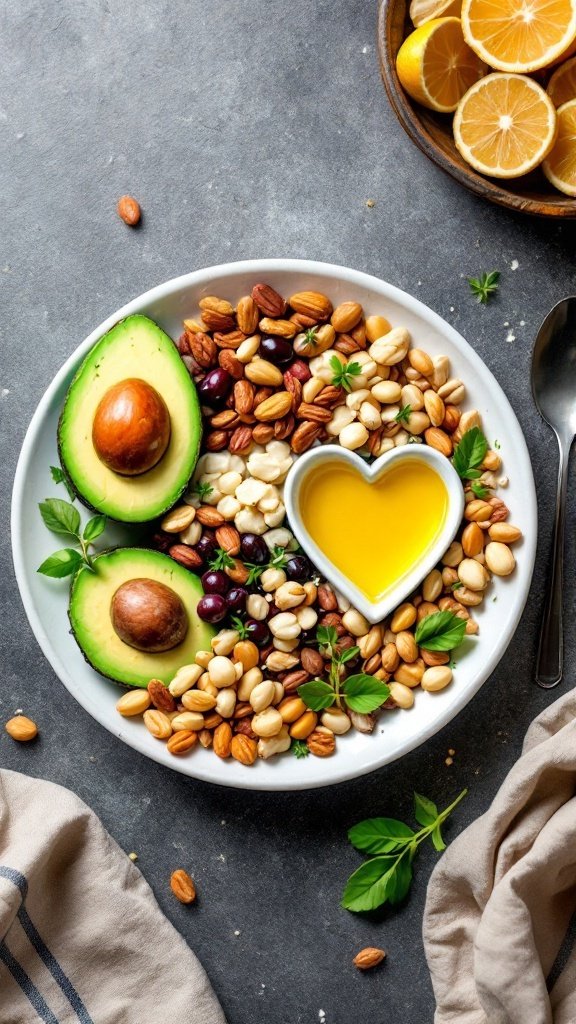
When it comes to heart health, the role of healthy fats is often overlooked. The image above beautifully showcases a variety of heart-friendly foods that can help maintain a healthy cardiovascular system. On this plate, you can see vibrant avocados, an assortment of nuts, and a splash of olive oil, all of which are packed with nutrients.
Avocados are a fantastic source of monounsaturated fats, which are known to lower bad cholesterol levels. They’re not just tasty; they also provide vitamins and minerals that contribute to overall well-being. Pair them with nuts like almonds and walnuts, and you get a crunchy snack that nourishes your heart.
The plate also features olive oil in a heart-shaped dish, emphasizing its importance in a heart-healthy diet. This oil is rich in antioxidants and healthy fats, making it a staple in many diets around the world. Drizzling some on your salads or using it for cooking can enhance both flavor and nutrition.
Including these healthy fats in your meals can help reduce inflammation and support heart function. It’s all about choosing the right types of fats, and the foods shown in the image are perfect examples. By incorporating them into your daily diet, you can take a simple step towards better heart health for seniors.
Importance of Balanced Diet for Seniors

A balanced diet is critical for seniors, as it helps maintain health and vitality. In the image, we see two elderly individuals enjoying a meal together. This scene highlights the joy that sharing food can bring, especially when it includes nutritious options.
As we age, our bodies require different nutrients. Older adults often need more protein, vitamins, and minerals to support their changing health needs. The colorful spread in the photo, featuring a variety of fruits and vegetables, showcases how a diverse diet can provide essential nutrients.
Eating together, like the couple in the image, fosters community and can make mealtime more enjoyable. This not only enhances emotional well-being but also encourages better eating habits. Sharing meals can motivate seniors to choose healthier options and try new foods.
Incorporating foods rich in antioxidants, fiber, and healthy fats can also help seniors prevent chronic diseases. Simple ingredients like leafy greens, berries, and lean proteins can easily find a place in daily meals. Planning meals together can make the process fun and engaging.
Overall, focusing on a balanced diet is key to enjoying a healthy lifestyle in later years. The image beautifully captures the essence of this idea, reminding us that food is not just about nutrition—it’s also about connection and joy.
Managing Blood Sugar Levels

When it comes to managing blood sugar levels, a balanced diet plays a crucial role. The image shows a senior woman surrounded by fresh vegetables and healthy foods, which is a great start for anyone looking to keep their blood sugar in check.
Incorporating fiber-rich foods, like leafy greens, tomatoes, and whole grains, can help stabilize blood sugar. It’s all about making smart choices. For example, instead of reaching for sugary snacks, consider munching on some nuts or fresh fruit. These options not only taste great but also provide essential nutrients.
It’s also helpful to keep track of what you eat. The woman in the photo is using her phone—perhaps to keep a food diary or check nutrition information. This can be a fantastic way to stay informed about your intake and make better choices. Just a simple app can help you monitor your meals and any snacks you enjoy.
Lastly, pairing carbohydrates with proteins can help slow down sugar absorption. Think about adding some lean protein to that salad or enjoying yogurt with your fruit. These combinations can support balanced energy levels throughout the day.
Cognitive Health and Nutrition
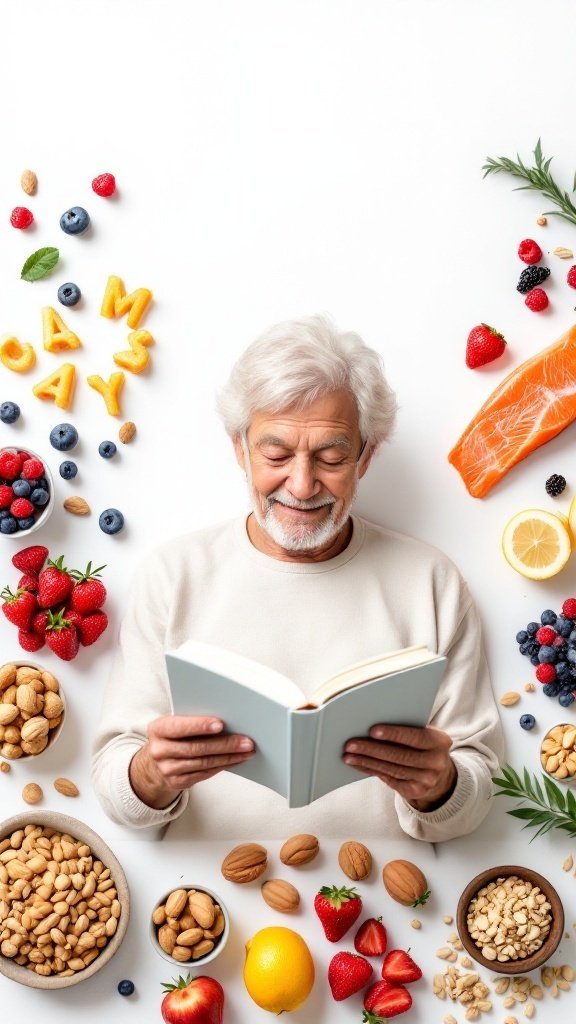
The image captures a senior man reading a book surrounded by an array of nutritious foods. This scene emphasizes the connection between diet and cognitive health.
Eating well is crucial as we age. The colorful spread of berries and nuts around him highlights foods rich in antioxidants and omega-3 fatty acids, which are known to support brain health.
Incorporating foods like salmon, almonds, and various fruits into daily meals can provide essential nutrients. These ingredients help maintain cognitive function and overall wellness.
Additionally, staying mentally active, as shown by the man reading, plays a significant role in keeping the mind sharp. Together, good nutrition and mental engagement can make a positive impact on cognitive health.
Supplements: When They Are Necessary

As we age, our bodies often need a little extra support. This is where supplements can come into play. They can be especially helpful for seniors whose diets may lack certain nutrients.
Sometimes, even a well-balanced meal may not provide everything our bodies require. Seniors can face unique challenges, like decreased appetite or difficulty absorbing nutrients. In these cases, supplements can bridge the gap.
It’s important to understand that not all seniors need supplements. Ideally, a varied diet rich in fruits, vegetables, whole grains, and lean proteins should be the foundation of nutrition. But if that’s not enough, consider discussing options with a healthcare provider.
Common supplements for seniors include vitamin D for bone health, calcium for strong bones, and B12 for energy. Omega-3 fatty acids can also be a great addition for heart health. Each supplement has its purpose, so knowing which ones may be beneficial is crucial.
Ultimately, supplements should complement a healthy diet, not replace it. Remember, it’s always best to get nutrients from food first. However, when needed, supplements can offer that extra support for a healthier life.
Meal Planning for Seniors
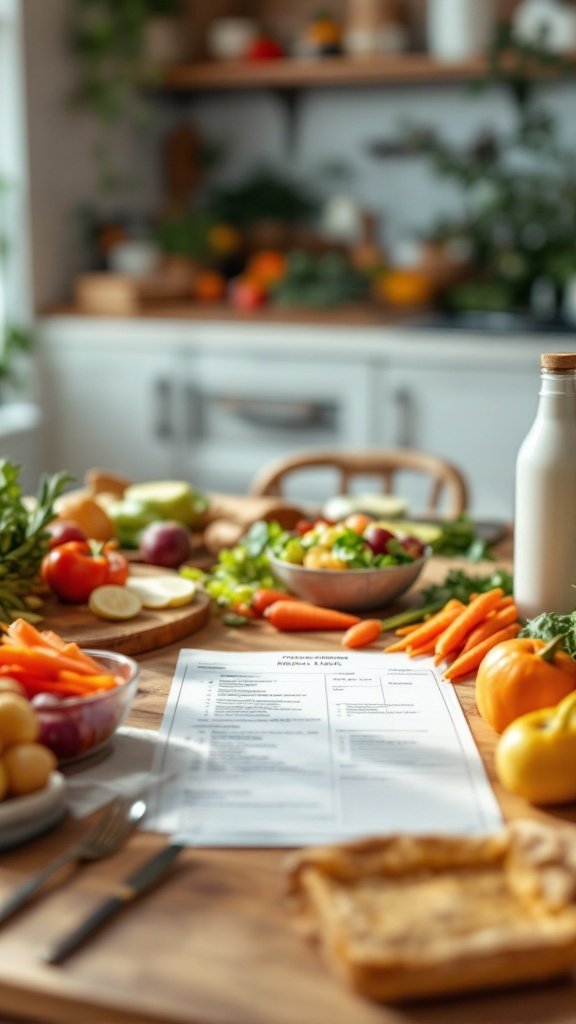
Meal planning is essential for seniors, helping them maintain a balanced diet and stay healthy. The image captures a cozy kitchen scene filled with fresh ingredients and a meal plan sheet on the table. This setup creates an inviting atmosphere that encourages cooking and eating well.
In the foreground, we see a mix of colorful vegetables and fruits like carrots, tomatoes, and greens. These ingredients are rich in vitamins and minerals, making them perfect for senior nutrition. Including a variety of these can make meals more interesting and nutritious.
The meal plan sheet is a handy tool that can help seniors organize their meals for the week. It often includes lists of ingredients and simple recipes. This helps make grocery shopping easier and ensures that meals are balanced.
When planning meals, consider focusing on whole foods. Incorporate whole grains, lean proteins, and plenty of fruits and vegetables. Simple recipes that are easy to prepare can go a long way in making mealtime enjoyable.
It’s also helpful to involve family members in meal preparation. This can turn cooking into a fun activity and foster connections over shared meals. Overall, a little planning can make a big difference in a senior’s diet and well-being.
Navigating Food Labels

Food labels can feel overwhelming, especially with all the information packed into them. For seniors, understanding these labels is key to making healthier choices. The image shows a thoughtful senior man studying a food label while shopping. This is a common scene, as many seniors are focused on selecting nutritious foods.
When looking at food labels, it’s important to start with the serving size. This tells you how much of the product is considered a single serving. Be mindful that the numbers can be tricky, and sometimes a package contains multiple servings.
Next, review the calorie count. This helps you gauge how much energy you’re getting from the food. For seniors, balancing energy intake is important to maintain a healthy weight without compromising nutrition.
The % Daily Value (%DV) section is another crucial part of the label. It tells you how much a nutrient in a serving contributes to your daily diet. Aim for foods that offer 20% or more of a nutrient like fiber or vitamins.
Finally, pay attention to ingredients. If a product has a long list filled with hard-to-pronounce names, it may not be the healthiest option. Stick to items with simple and recognizable ingredients. Making informed choices at the grocery store can greatly benefit overall nutrition for seniors.
Heart-Healthy Cooking Methods
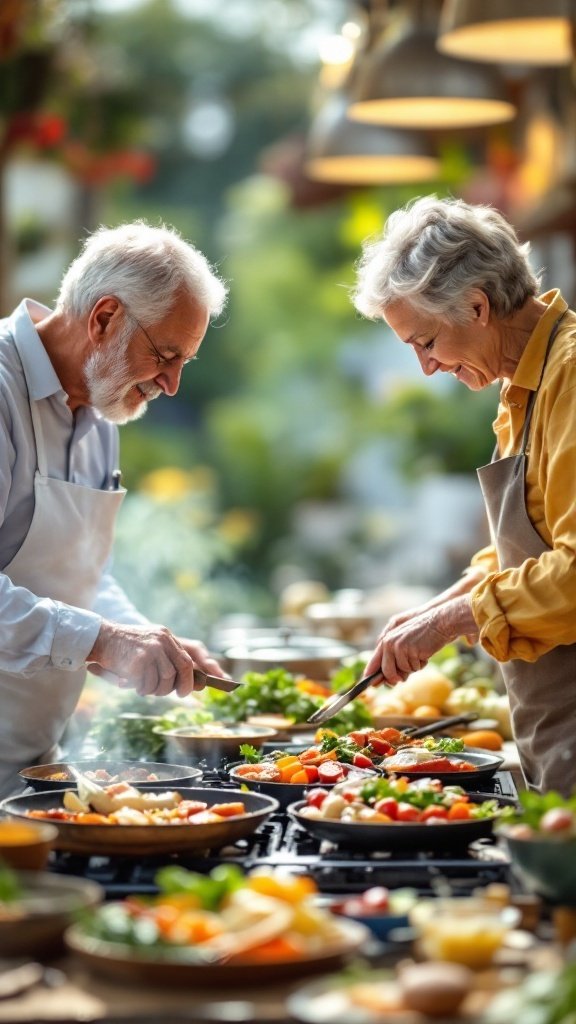
Cooking heart-healthy meals can be a delightful experience, especially when shared with a loved one. In the image, we see two seniors, joyfully preparing fresh ingredients together. Their smiles reflect the joy of cooking and the importance of maintaining a healthy lifestyle.
When it comes to heart health, the methods we use in the kitchen matter. Steaming, grilling, and sautéing with minimal oil are excellent ways to prepare meals without losing flavor. Using fresh vegetables, as shown in the image, adds both color and nutrition to their dishes.
For a simple heart-healthy recipe, try this: slice up some bell peppers, zucchini, and cherry tomatoes. Toss them with a little olive oil, garlic, and herbs. Grill them on a medium heat until they’re tender. Serve alongside whole grain pasta or brown rice for a satisfying meal.
Cooking together, as seen in the picture, not only nourishes the body but also creates bonds. Sharing recipes and techniques can make healthy cooking fun and engaging. So, gather your loved ones, pick a recipe, and enjoy the flavors and health benefits together!
Mindful Eating Practices

Mindful eating is a wonderful approach that can help seniors enjoy their meals more fully. It encourages taking a moment to appreciate the food in front of them, just like the woman shown in the image. She appears relaxed and focused, savoring each bite of her colorful salad.
When practicing mindful eating, it’s important to eliminate distractions. This means turning off the television or putting away mobile devices. Instead, seniors can enjoy their meals in a calm environment, surrounded by plants that create a soothing atmosphere.
Another aspect of mindful eating involves recognizing hunger cues. Eating should feel satisfying, not rushed. Seniors can take their time, chew slowly, and really enjoy the flavors and textures of their food. This not only enhances the eating experience but can also aid digestion.
Incorporating a variety of foods, like fresh vegetables and fruits, helps to create balanced meals. As seen in the image, a colorful plate can be both appealing and nutritious. Seniors should aim to include different colors on their plate, as this often means a wider range of nutrients.
Lastly, sharing meals with friends or family can make eating even more enjoyable. It can turn a simple meal into a delightful social occasion. Enjoying food in good company can lead to a happier mealtime experience.
Portion Control for Weight Management
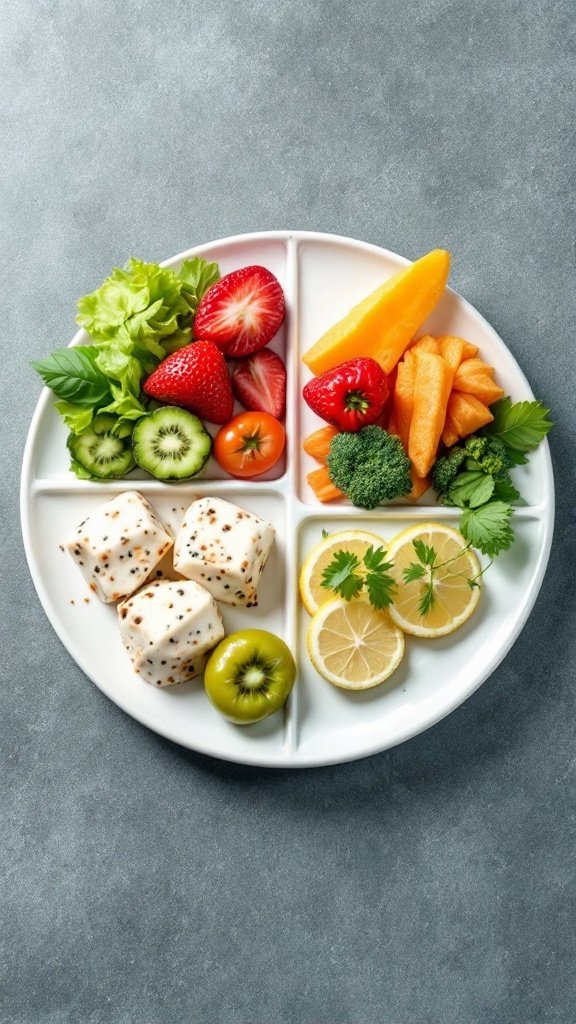
Portion control is a simple yet effective way to manage weight, especially for seniors. The image above beautifully illustrates this concept with a balanced plate full of vibrant fruits and vegetables.
On this plate, you can see a mix of greens, strawberries, and melons, all neatly arranged. This kind of presentation not only makes the meal appealing but also encourages healthy eating habits. Each section of the plate represents a different food group, which is essential for a well-rounded diet.
For seniors, it’s important to focus on nutrient-dense foods. The colorful fruits and vegetables shown here are packed with vitamins and minerals. Incorporating a variety of these foods can help meet daily nutritional needs while keeping calorie consumption in check.
When planning meals, consider using smaller plates. This can help with portion sizes, making it easier to stick to recommended serving amounts. For example, filling half your plate with fruits and vegetables, a quarter with protein, and the remaining quarter with whole grains can be a simple guideline to follow.
Cultural Foods and Nutrition
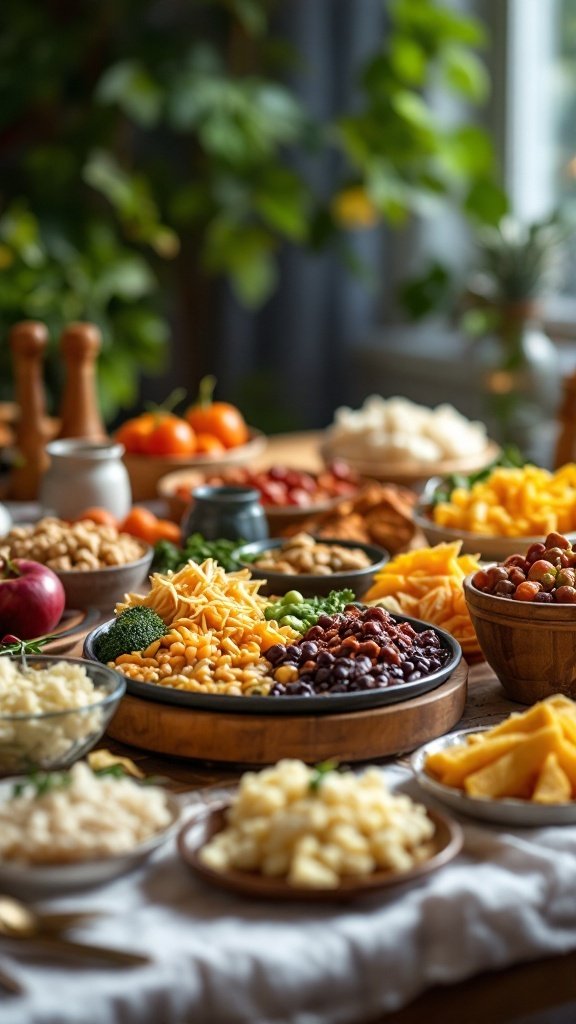
When we think about nutrition for seniors, cultural foods play a vital role. Each culture offers unique ingredients and flavors that can enhance a diet while providing essential nutrients. The image shows a vibrant assortment of fruits, vegetables, grains, and legumes, highlighting the diversity of foods available.
From beans to fresh produce, this colorful spread includes many options that can cater to various dietary needs. For instance, beans are a fantastic source of protein, while fruits like apples and oranges provide vital vitamins and minerals. Incorporating these foods into daily meals can help seniors maintain their health and energy levels.
Cooking methods can also reflect cultural traditions. Steaming vegetables or preparing hearty stews can maximize nutrient retention. If you’re looking for a healthy and delicious recipe, consider making a bean salad with black beans, corn, diced tomatoes, and a bit of lime juice. This simple dish is not only easy to prepare but also packed with nutrients.
Overall, embracing cultural foods allows seniors to enjoy meals that are both nourishing and nostalgic. Exploring recipes from different cultures can bring variety to their diets and make mealtimes more enjoyable.
Meal Timing and Frequency
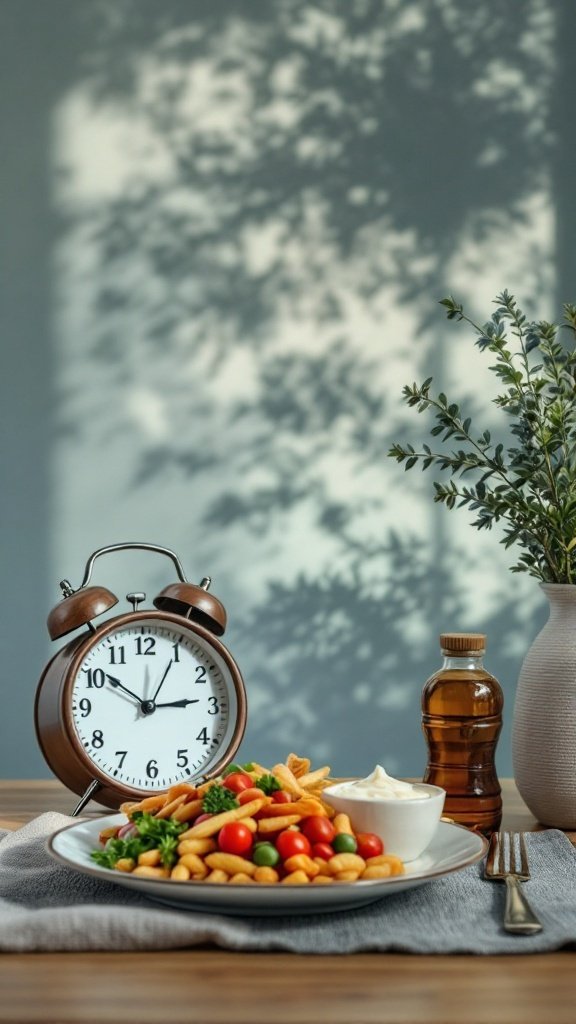
When it comes to nutrition for seniors, meal timing and frequency play a big role. The image captures a cozy scene with a plate of colorful pasta, fresh vegetables, and a clock that reminds us of the importance of timing in our daily meals. Eating at regular intervals can help maintain steady energy levels and improve overall health.
For seniors, it’s beneficial to have smaller, more frequent meals throughout the day. This approach can aid digestion and ensure that essential nutrients are consumed steadily. Instead of three large meals, consider breaking them into five or six smaller ones. This makes it easier to manage hunger and keeps metabolism steady.
In the image, you see a bottle of oil, which could be part of a healthy dressing or cooking ingredient. Incorporating healthy fats in meals is key. Olive oil, for example, is a great addition to salads or pasta dishes. It not only enhances flavor but also provides healthy nutrients.
Don’t forget about hydration! The image shows a bottle of liquid, reminding us to drink plenty of water throughout the day. Staying hydrated supports digestion and overall well-being. Make sure to sip water regularly, especially between meals.
Healthy Snacks for Seniors
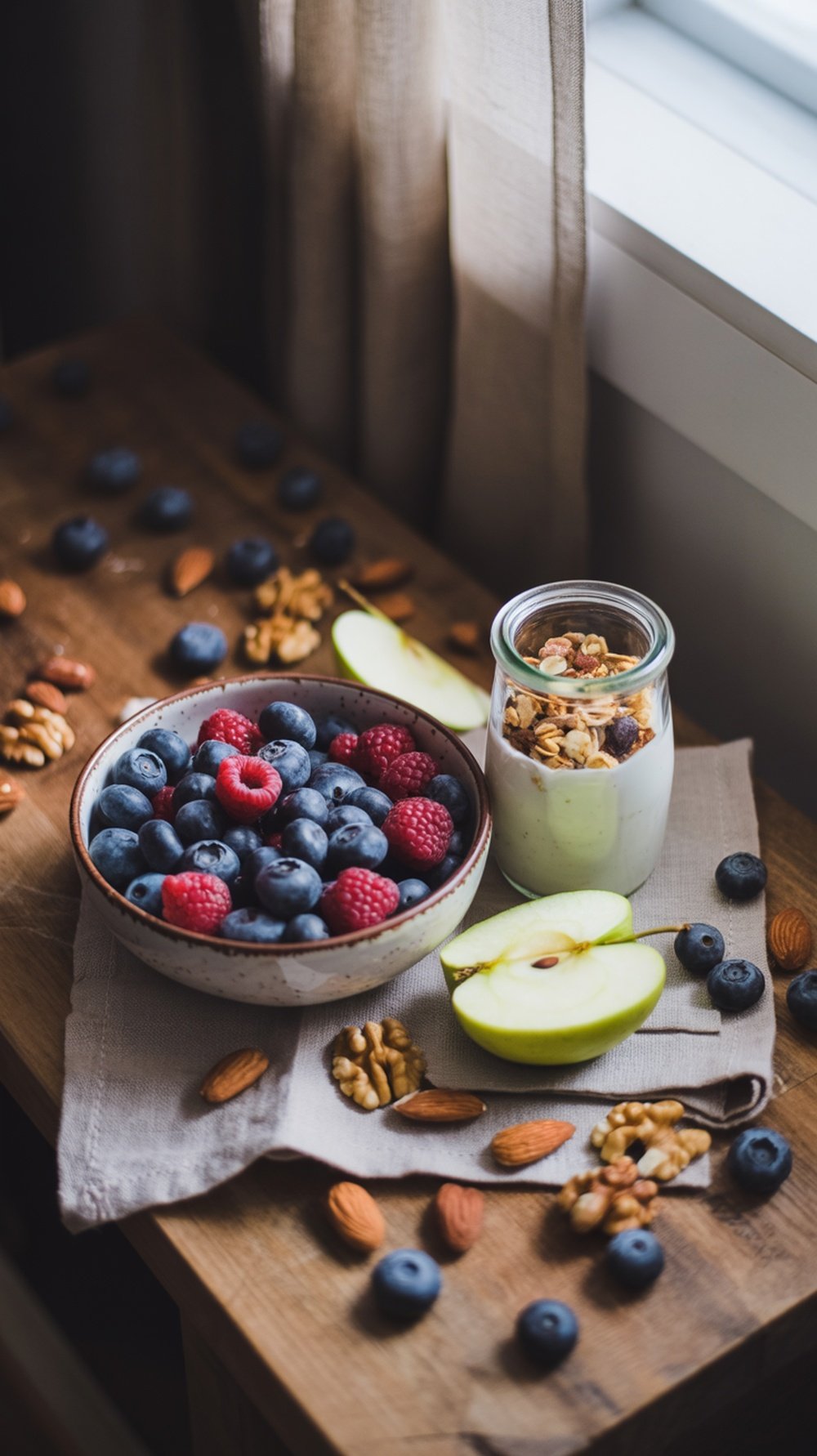
Snacking can be a fun and fulfilling part of a senior’s day. The image shows a beautiful spread of nutritious snacks that are perfect for maintaining a balanced diet. Fresh strawberries, a creamy yogurt, and a variety of nuts come together to create a delightful and healthy selection.
Incorporating fruits like strawberries not only adds sweetness but also provides essential vitamins. Nuts, on the other hand, are packed with healthy fats, making them a great source of energy. Greek yogurt can be a fantastic snack packed with protein, helping to keep muscles strong.
For a quick and easy snack idea, you can mix a handful of almonds with fresh berries. This combination is rich in antioxidants and supports overall health. Another option is to enjoy some yogurt topped with a sprinkle of granola for added texture.
These snacks are not only nutritious but also easy to prepare. Keeping a variety of healthy snacks on hand can make it easier to maintain good nutrition. Try to mix and match different items from the image to keep things interesting!
Avoiding Processed Foods
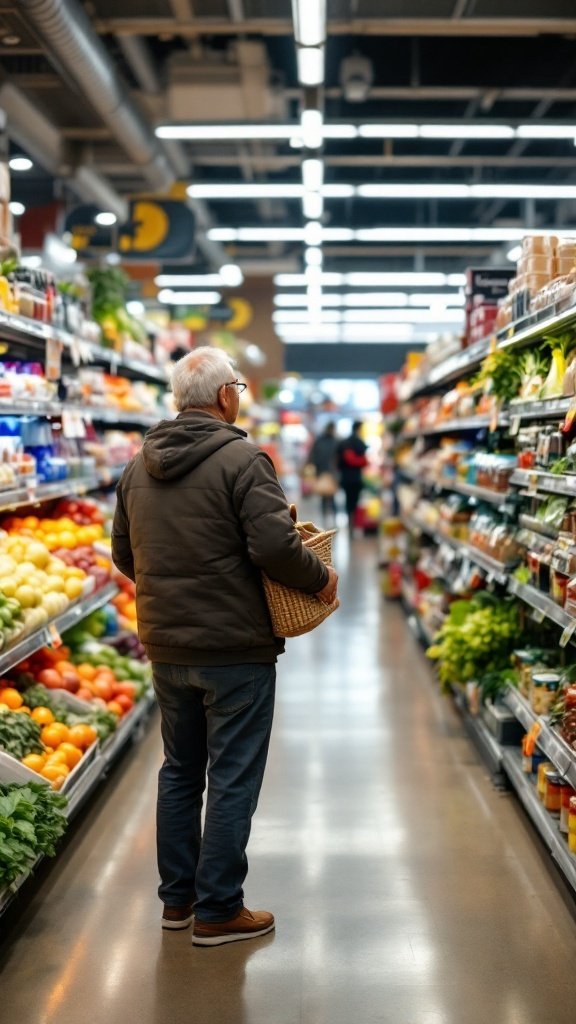
In the image, we see an older gentleman in a grocery store, standing in the produce aisle. He has a basket in hand and is surrounded by a vibrant array of fruits and vegetables. This visual reminds us of the importance of choosing whole foods as we age.
Processed foods can be tempting because they are often convenient. However, they usually contain a lot of added sugars, unhealthy fats, and preservatives. These ingredients can affect health negatively, especially for seniors.
Instead of reaching for a box or a can, it’s better to fill your basket with fresh produce. Fruits and vegetables provide essential vitamins and minerals that help keep the body functioning well. They also have fiber, which is great for digestion.
When shopping, focus on the perimeter of the store where the fresh items are located. This strategy can help you avoid aisles filled with processed products. Planning meals around fresh ingredients can lead to healthier eating patterns.
Incorporating more whole foods into your diet can be a simple yet effective change. It’s all about making small adjustments that add up over time. So next time you’re at the store, channel the spirit of the gentleman in the image: aim for a colorful basket full of nature’s goodness!
Social Aspects of Eating
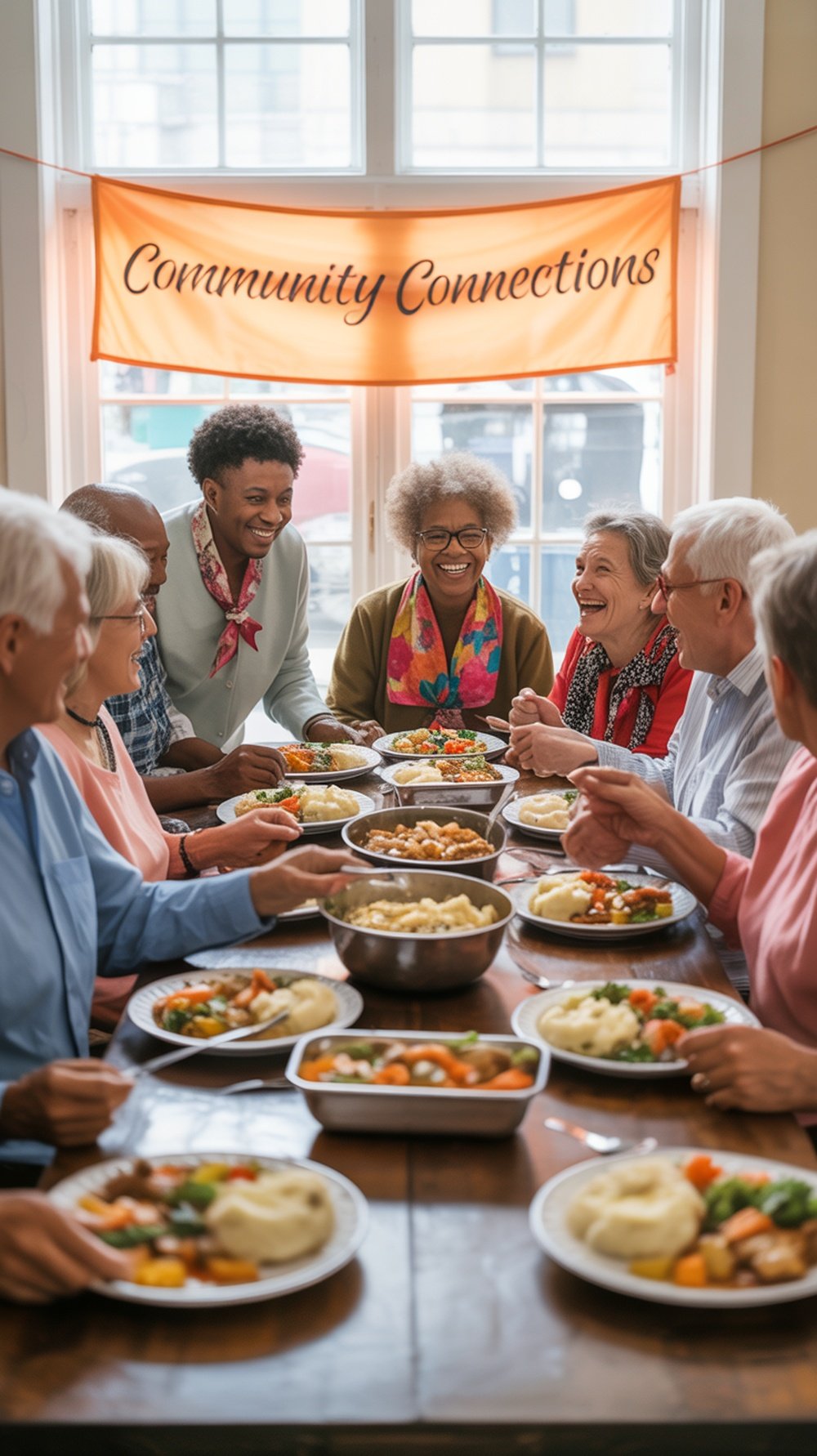
Eating is not just about nutrition; it’s also about connection. For seniors, sharing meals with family and friends can enhance their mood and overall well-being. A simple meal can turn into a cherished gathering, filled with stories and laughter.
Many seniors enjoy cooking together with loved ones. This activity can be a fun way to bond while preparing tasty and healthy dishes. It’s also a chance to pass down family recipes, keeping traditions alive.
Restaurants and community centers often host special events for seniors, encouraging social interaction over meals. These outings can reduce feelings of loneliness and provide a sense of belonging.
It’s also important to choose foods that are not only nutritious but also enjoyable. Seniors might prefer meals that remind them of their younger days or that are easy to share with others. Think soft foods that are easy to chew or dishes that can be served family-style.
Navigating Food Allergies and Intolerances

In the vibrant world of grocery shopping, we see a senior man, thoughtfully browsing through shelves filled with colorful fruits and vegetables. He holds a notebook, perhaps a list of items to buy or a guide to help him make informed choices. This scene captures the essence of being mindful about nutrition, especially for seniors who may face food allergies or intolerances.
As we age, our bodies can react differently to certain foods. It’s vital to recognize these changes and adapt our diets accordingly. For some, dairy might become hard to digest, while others may find gluten troublesome. Knowing what to avoid is just as important as knowing what to eat.
When navigating food options, reading labels is essential. Ingredients can vary widely, and hidden allergens can be lurking in unexpected places. For example, a favorite snack might contain nuts or dairy, which could be risky for those with allergies.
Making meals at home can be a safe way to control ingredients. Simple recipes using whole foods are often the best choice. Think fresh veggies, lean proteins, and whole grains. A colorful salad with quinoa, cherry tomatoes, spinach, and grilled chicken is not only nutritious but also easy to customize based on personal needs.
In conclusion, being aware of food allergies and intolerances is crucial for senior nutrition. This gentle approach to eating not only promotes health but can also make grocery shopping an enjoyable experience. The key is to take your time, be informed, and savor the journey of good nutrition.
Building a Supportive Eating Environment
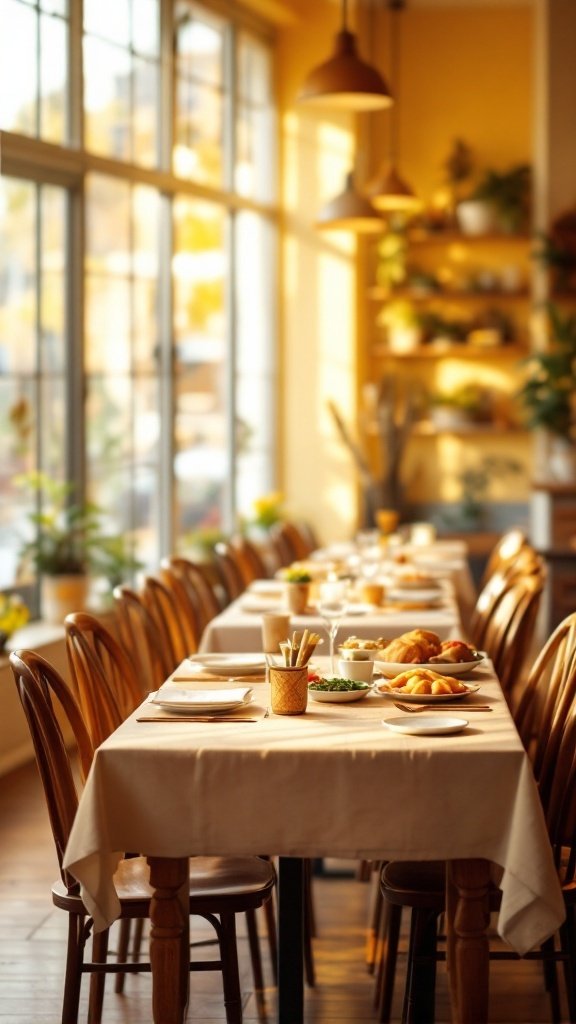
Creating a welcoming eating space can make a big difference for seniors. The image above shows a bright and inviting dining area that’s perfect for meals. Natural light floods in from the windows, creating a warm atmosphere. This kind of setting encourages people to gather around the table and enjoy their food together.
Having a well-set table, like in the image, adds to the experience. Notice the plates and utensils neatly arranged, ready for a meal. This preparation helps seniors feel cared for and valued. It’s not just about the food; it’s about the whole experience of sharing a meal.
Including nutritious options on the table can also support better eating habits. Foods like fresh vegetables, whole grains, and lean proteins should be easily accessible. This way, seniors can make healthier choices without feeling overwhelmed. Each meal can be a chance to fuel the body and enjoy good company.
Furthermore, a comfortable environment helps promote better digestion and encourages social interaction. Soft colors and pleasant decor, as seen in the image, can make the space feel more inviting. When seniors feel comfortable, they are more likely to enjoy their meals and try new foods.
Cooking for One: Simple Recipes
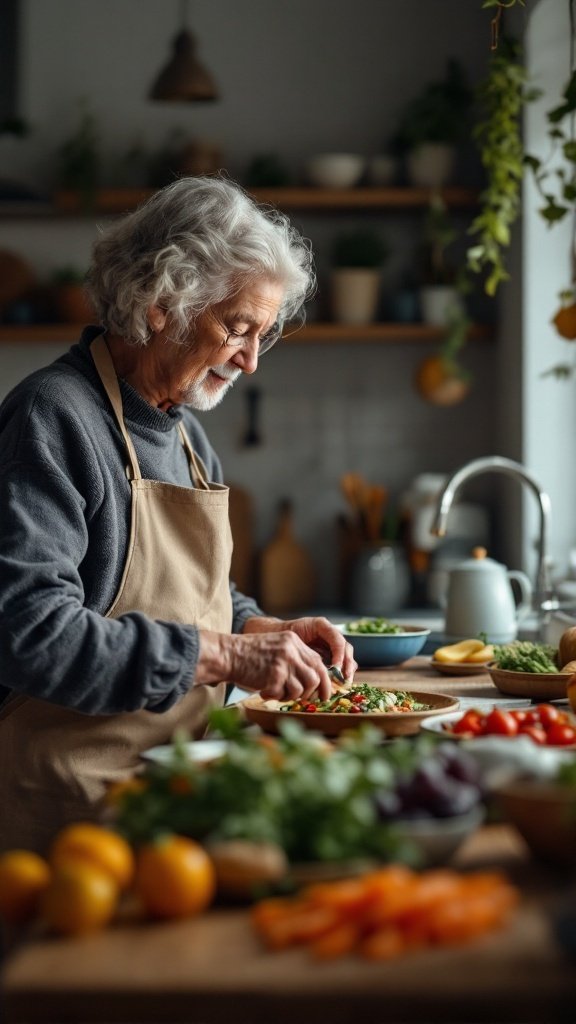
Cooking for one doesn’t have to be a chore. With just a few fresh ingredients, you can whip up something healthy and tasty. In the image, we see a senior person enjoying the process of preparing a meal. This reflects a joyful approach to cooking that can inspire anyone.
One simple recipe to try is a vegetable stir-fry. You’ll need a mix of your favorite vegetables, such as bell peppers, broccoli, and carrots. Just chop them up, heat a little oil in a pan, and toss them in. Cook for about 5–7 minutes, add some soy sauce, and voilà! You have a nutritious meal that’s quick and easy.
If you want to make it even heartier, you can add some cooked chicken or tofu. This not only boosts the protein but also keeps you full longer. Plus, it’s a great way to use up any veggies that might be sitting in your fridge.
Don’t hesitate to experiment with flavors. A sprinkle of garlic or ginger can add a nice kick. The best part about cooking for one is that you can make it exactly how you like it. So gather your ingredients, and enjoy the process just like the person in the kitchen!
Understanding Nutritional Needs During Illness

When seniors face illness, their nutritional needs can change significantly. This may be a time when they require more care and attention to their diet. In the image, we see a doctor engaging warmly with a senior patient, which highlights the importance of support during this vulnerable time.
Nutrition plays a critical role in recovery and overall health. For seniors, eating the right foods can help boost their immune system, promote healing, and maintain strength. It’s essential to focus on nutrient-dense foods that provide the necessary vitamins and minerals while being easy to digest.
Incorporating foods like fruits and vegetables, lean proteins, and whole grains can be beneficial. For instance, bright oranges and ripe tomatoes on the table in the image represent healthy options that can provide vital nutrients. Seniors should also stay hydrated, as fluid intake is crucial for maintaining health.
Consulting with healthcare providers about specific dietary needs is key. The doctor in the image not only provides medical advice but also shows the importance of a caring relationship in addressing the nutritional needs of seniors during illness. Simple changes and thoughtful meal planning can make a big difference in their health and recovery.
Emphasizing Local and Seasonal Foods
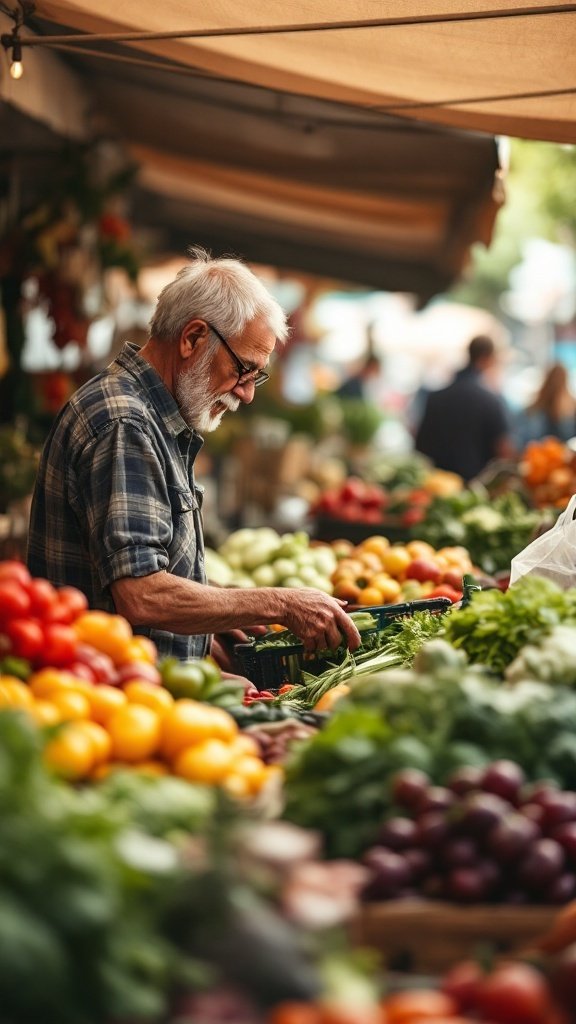
Shopping at local farmers’ markets is a delightful way to enjoy fresh produce. In the image, we see an older gentleman exploring a vibrant market full of colorful fruits and vegetables. This scene captures the essence of choosing local and seasonal foods, which is beneficial for seniors’ nutrition.
Local foods are often fresher and packed with nutrients. When produce is in season, it not only tastes better but is also more affordable. Seasonal fruits and vegetables can inspire delicious meals that are easy to prepare. For example, incorporating seasonal greens into salads or stir-fries can add both flavor and health benefits.
Another perk of shopping locally is supporting community farmers. This fosters a connection between consumers and producers, ensuring that the food is grown sustainably. It’s a win-win situation for everyone involved!
When planning meals, consider what’s in season in your area. Look for recipes that focus on these fresh ingredients. A simple salad with tomatoes, cucumbers, and basil can be refreshing and nutritious. Or, try roasting seasonal root vegetables for a hearty side dish.
Preventing Malnutrition in Seniors
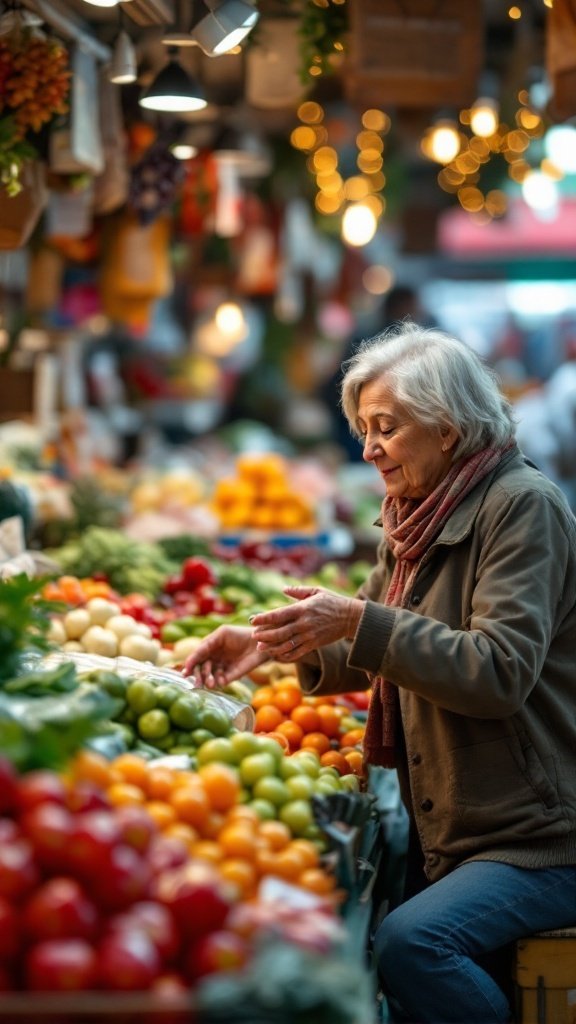
Malnutrition is a serious concern for seniors, and shopping for fresh produce can help prevent it. In the image, we see an older woman surrounded by colorful fruits and vegetables at a market. This setting highlights the importance of choosing nutritious foods.
Eating a variety of fruits and vegetables is key. These foods are packed with vitamins and minerals that support overall health. The vibrant colors in the market show just how many options are available. From bright oranges to deep greens, each color represents different nutrients.
When seniors make a habit of shopping for fresh foods, they engage in a social activity too. This can boost mood and encourage more balanced eating habits. Planning meals that include plenty of fruits and vegetables can also help avoid nutrient deficiencies.
Simple recipes that include these ingredients can be created easily. For example, a colorful salad or a vegetable stir-fry can make use of the fresh produce seen in the image. Not only are they healthy, but they are also quick to prepare.
Incorporating fresh foods into daily meals is a fun way to maintain a balanced diet and prevent malnutrition. Encouraging seniors to explore local markets can spark joy in cooking and eating well.
The Role of Family in Nutrition

Family plays a crucial role in the nutrition of seniors. Sharing meals together can foster a sense of belonging and joy. In the image, we see a senior man enjoying a meal surrounded by family. Their smiles and laughter show how food can bring people closer.
When families come together to eat, they can ensure that the meals are nutritious. This is especially important for seniors who may have specific dietary needs. With family support, they can enjoy a variety of foods that are both healthy and tasty.
Planning meals as a family can also encourage healthier eating habits. Everyone can contribute ideas and recipes, making mealtime more enjoyable. For instance, they might include colorful vegetables like tomatoes and greens, as seen in the image, which not only look appealing but also provide essential nutrients.
Having family around during meals can also motivate seniors to eat more regularly. Sometimes, seniors may skip meals or not eat enough on their own. Knowing that family is there can change that. It creates an inviting atmosphere that encourages seniors to participate.
Lastly, cooking together can be a fun activity for all ages. It can also be a great way for family members to pass down traditions and recipes. This not only enhances nutrition but also builds lasting memories.
Incorporating Variety for Nutritional Balance
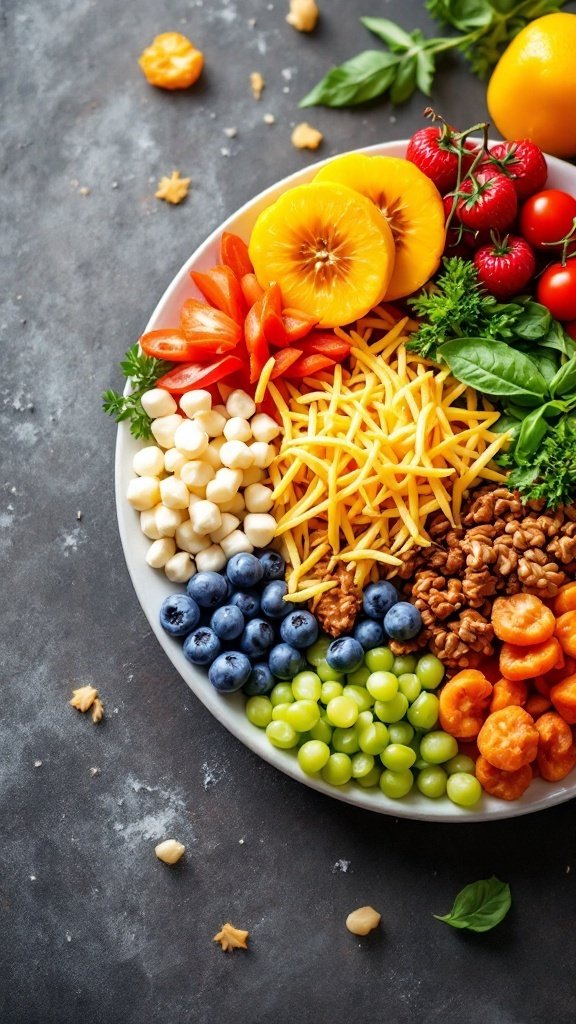
A colorful plate filled with fresh fruits, vegetables, and nuts showcases how enjoyable and diverse meals can be. This image highlights a variety of nutritious options like blueberries, grapes, cherry tomatoes, and carrots, making healthy eating feel less like a chore and more like a treat.
Incorporating variety into meals is crucial for seniors, as it ensures that they get a wide range of vitamins and minerals. Different colors often represent different nutrients, so a plate like this one is a simple way to cover those bases. For example, the greens provide essential vitamins, while the oranges and yellows are rich in antioxidants.
It’s key to mix textures and flavors. Crispy, crunchy, sweet, and savory all have their place on the plate. This not only keeps meals interesting but also encourages better digestion and overall satisfaction. Pairing these foods with proteins like nuts or cheese can further enhance the balance of nutrients.
For a quick snack or light meal, consider creating your own version of this plate. Grab some cherry tomatoes, a handful of nuts, and a few slices of fruit. Not only is this a quick option, but it can also be a fun activity to prepare with family or friends. Eating a rainbow of foods not only looks appealing but also promotes better health.
Addressing Taste Changes with Age
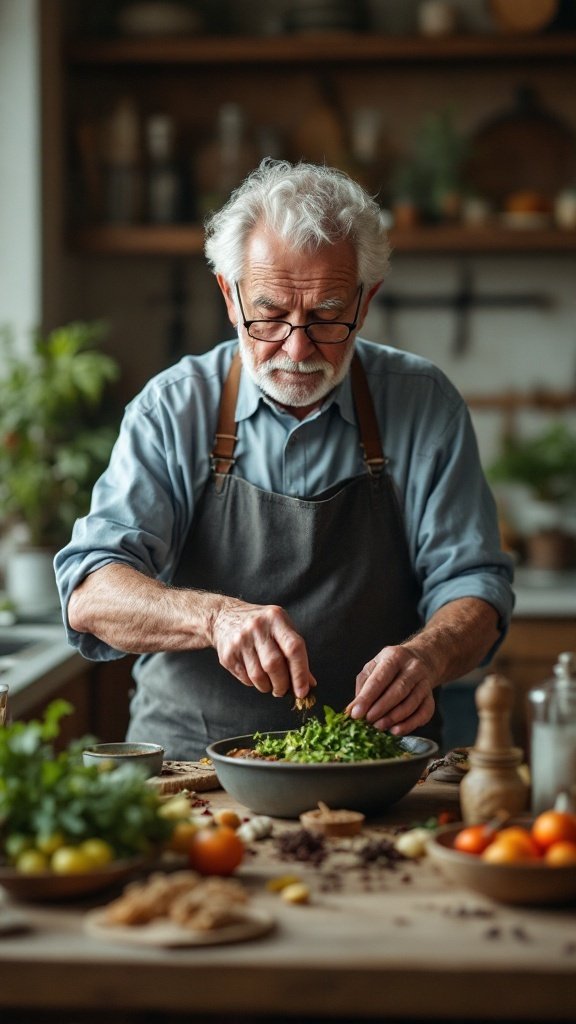
As we age, our taste buds can change, making food less enjoyable. This can be frustrating, but there are ways to adapt. The image captures a senior man happily preparing a fresh salad, showing that cooking can still be a joyful experience, even as our tastes shift.
Incorporating fresh herbs and vibrant ingredients can help enhance flavors. In the photo, you can see an array of greens and colorful vegetables, which are not only healthy but can also make meals more appealing. It’s all about finding the right combinations that ignite the taste buds.
One simple way to spice up meals is by adding a variety of herbs. Basil, cilantro, and parsley can transform a dish. When cooking, consider using citrus or vinegar to add brightness, as seen in the image. These elements can bring life back to meals that may taste bland.
Another tip is to experiment with textures. Crunchy vegetables, nuts, or seeds can add a satisfying crunch that may be missing from softer foods. The gentleman in the image seems focused and engaged, reminding us that cooking can be a great way to explore new flavors and textures.
Encouraging Physical Activity Alongside Nutrition

Physical activity is a key part of staying healthy, especially for seniors. The image shows a cheerful couple enjoying a walk together in a beautiful park. The fall colors create a warm and inviting atmosphere. This kind of outdoor activity enhances both physical and mental well-being.
Walking, like the couple in the picture, is a simple yet effective way for seniors to stay active. It’s easy to fit into daily routines and can be done almost anywhere. Regular walks can help improve cardiovascular health and boost mood.
Pairing physical activity with a balanced diet is essential. Seniors should focus on foods rich in nutrients, such as fruits, vegetables, whole grains, and lean proteins. Staying hydrated is also important, especially during physical activity.
Encouraging social interactions, like walking with a friend or family member, adds another layer of enjoyment. It makes exercise feel less like a chore and more like a fun outing. So, grab a partner and hit the trails or local parks!
This post may contain affiliate links which means I may receive a commission for purchases made through links. I will only recommend products that I have personally used! Learn more on my Private Policy page.
